Equity
Low-Income Students' Graduation Rate Hits 12-Year Low
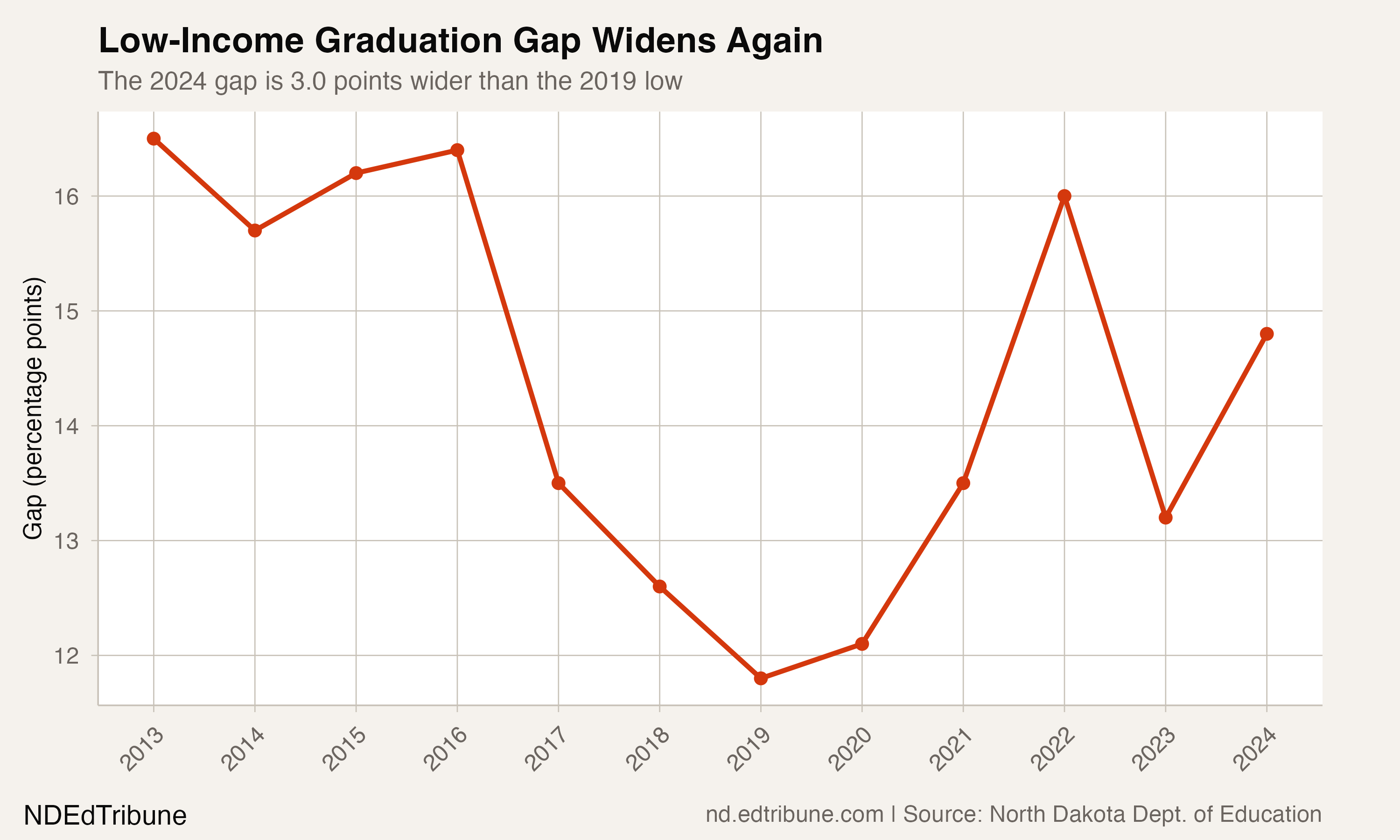
North Dakota's economically disadvantaged students graduate at 67.6%, the lowest rate in 12 years of state data.
Peace Garden State Education Coverage, Driven by Data
Education News & Data
Local education reporting from every corner of North Dakota, grounded in North Dakota Department of Education data.
The seven districts in this comparison with 2025 data raised their combined graduation rate from 70.1% to 79.6%, but none reached North Dakota's 84.2% rate.
North Dakota enrollment grew 23.7% since 2008, but ten continuously reported districts produced 74.2% of gains in the stable panel.
Bismarck graduates 53.7% of Native American students, a 36.6-point gap from the 90.3% white rate, despite a growing NA cohort.
Nearly a quarter of North Dakota districts with enough data history posted their lowest-ever graduation rates in 2024.
North Dakota's economically disadvantaged students graduate at 67.6%, the lowest rate in 12 years of state data.
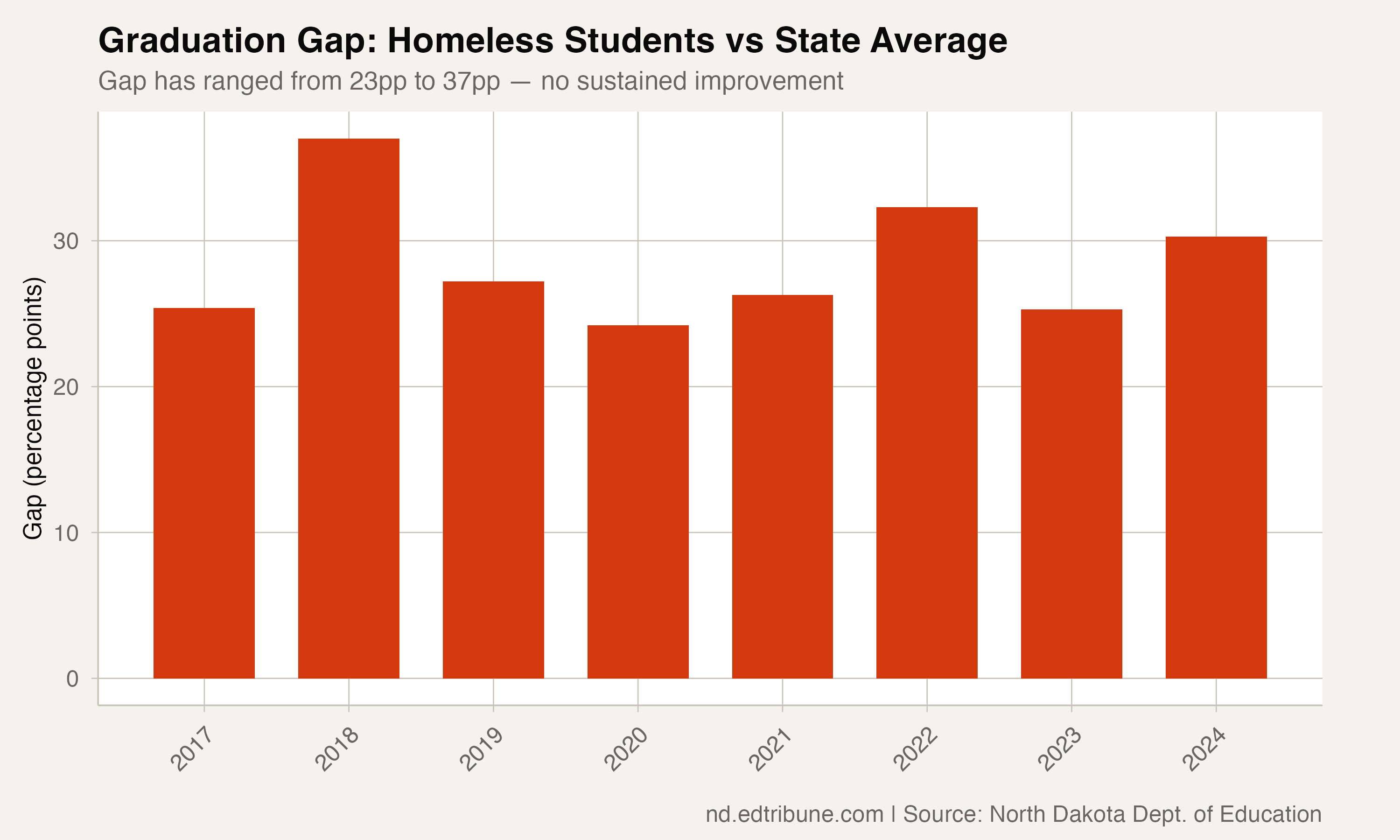
The graduation rate for North Dakota students who are currently homeless has been stuck below 65% for eight years, with a 30-point gap to the state average.
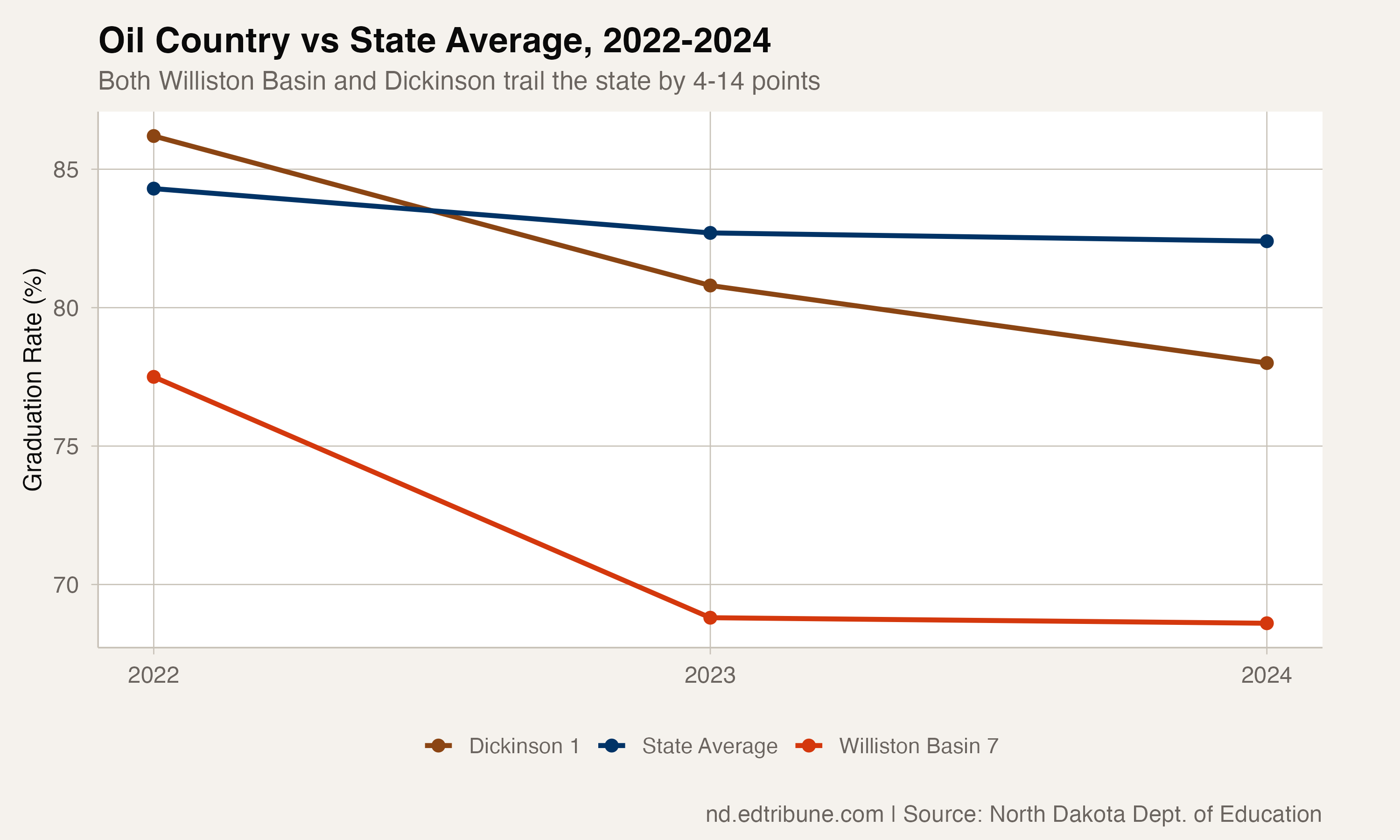
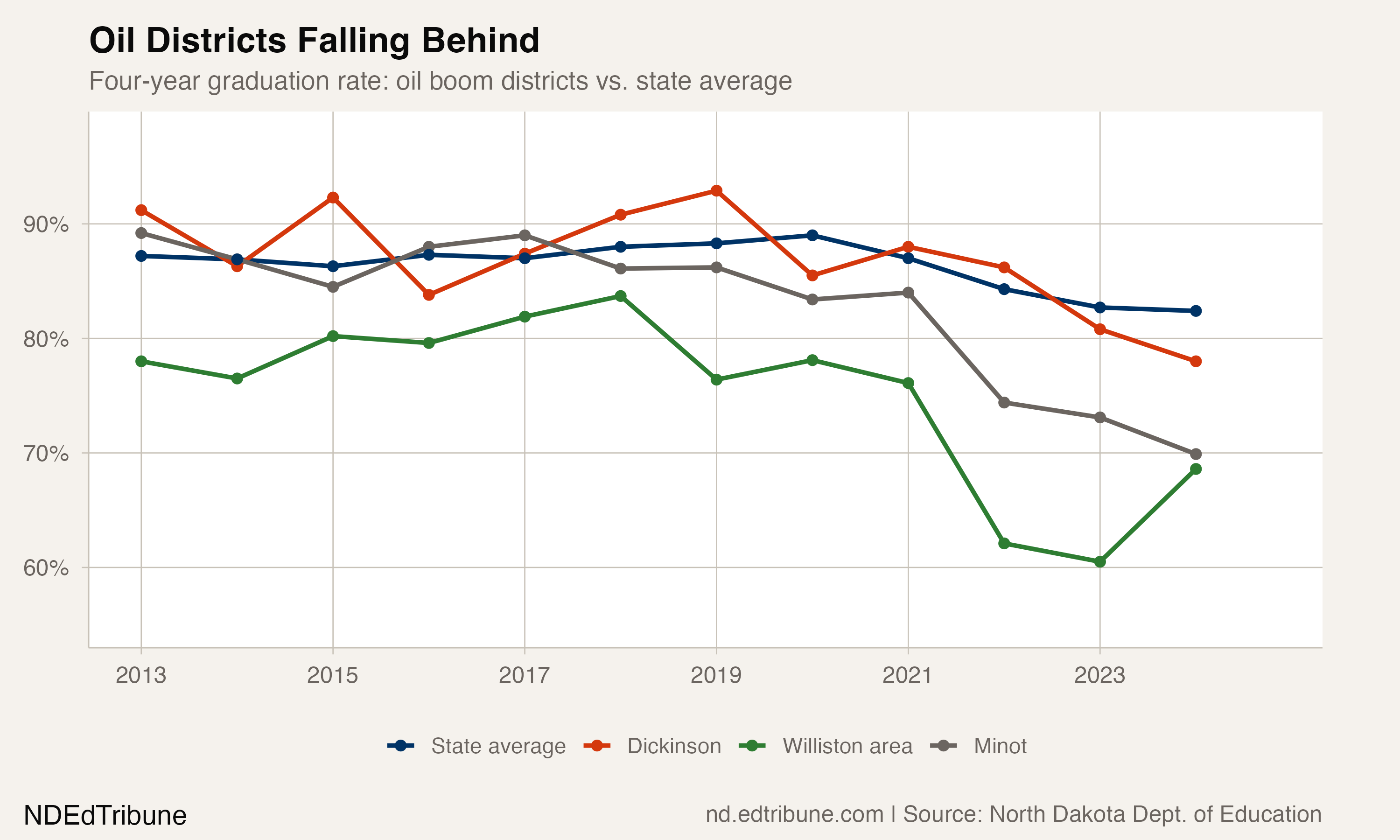
Williston Basin district graduates just 68.6% of students, the lowest rate among large ND districts, amid oil boom-driven growth and transience.
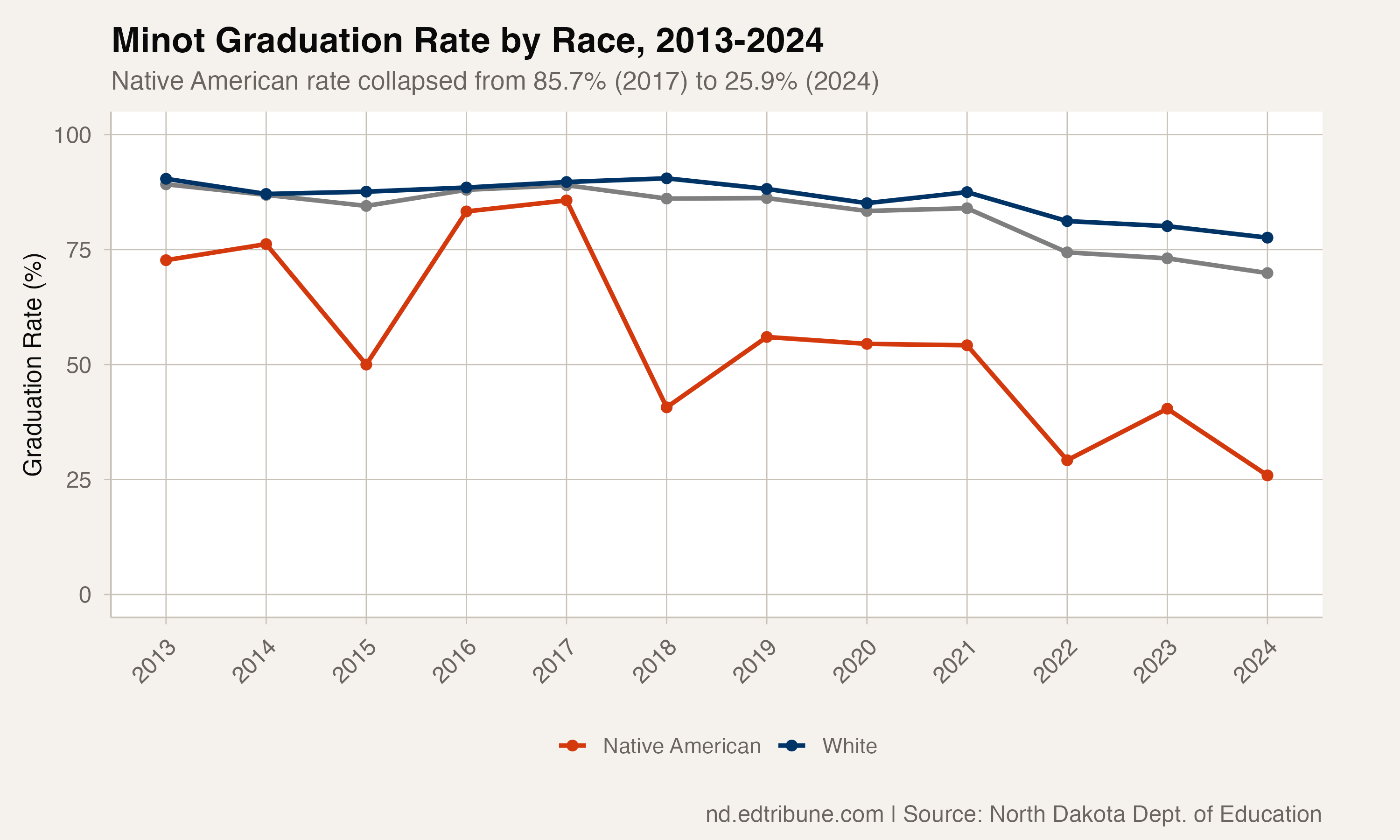
Minot's Native American graduation rate has collapsed to 25.9%, down from 85.7% seven years ago, amid a broader district-wide decline.
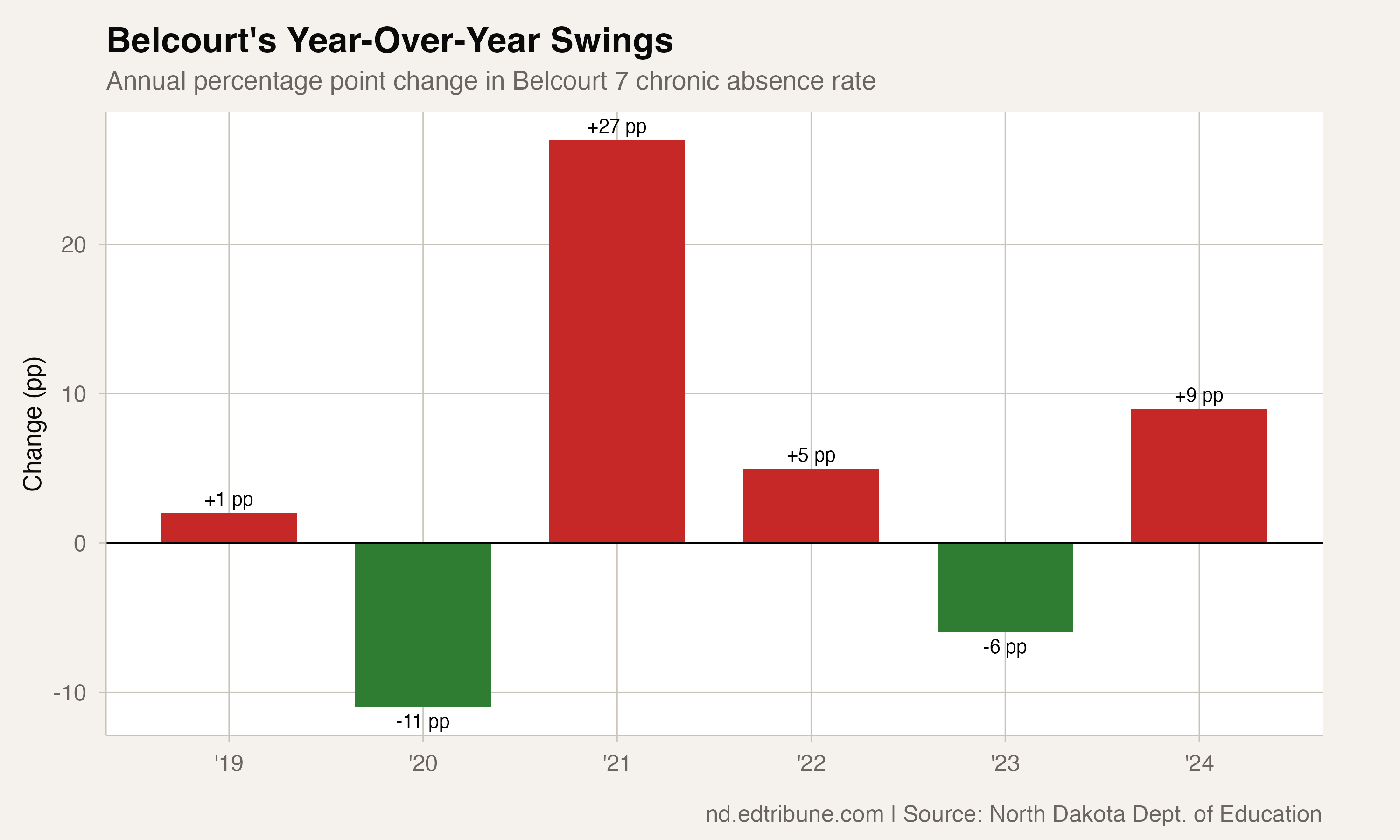
The Turtle Mountain reservation district saw its chronic absence rate jump from 28% to 54%, with one high school reaching 72%, as COVID reversed partial progress and the 2024 rate surged 9 points.
McKenzie County grew enrollment 344.8% and still graduates 85.8% of seniors. Other oil-boom districts grew just as fast and now sit lower in the state's graduation table.
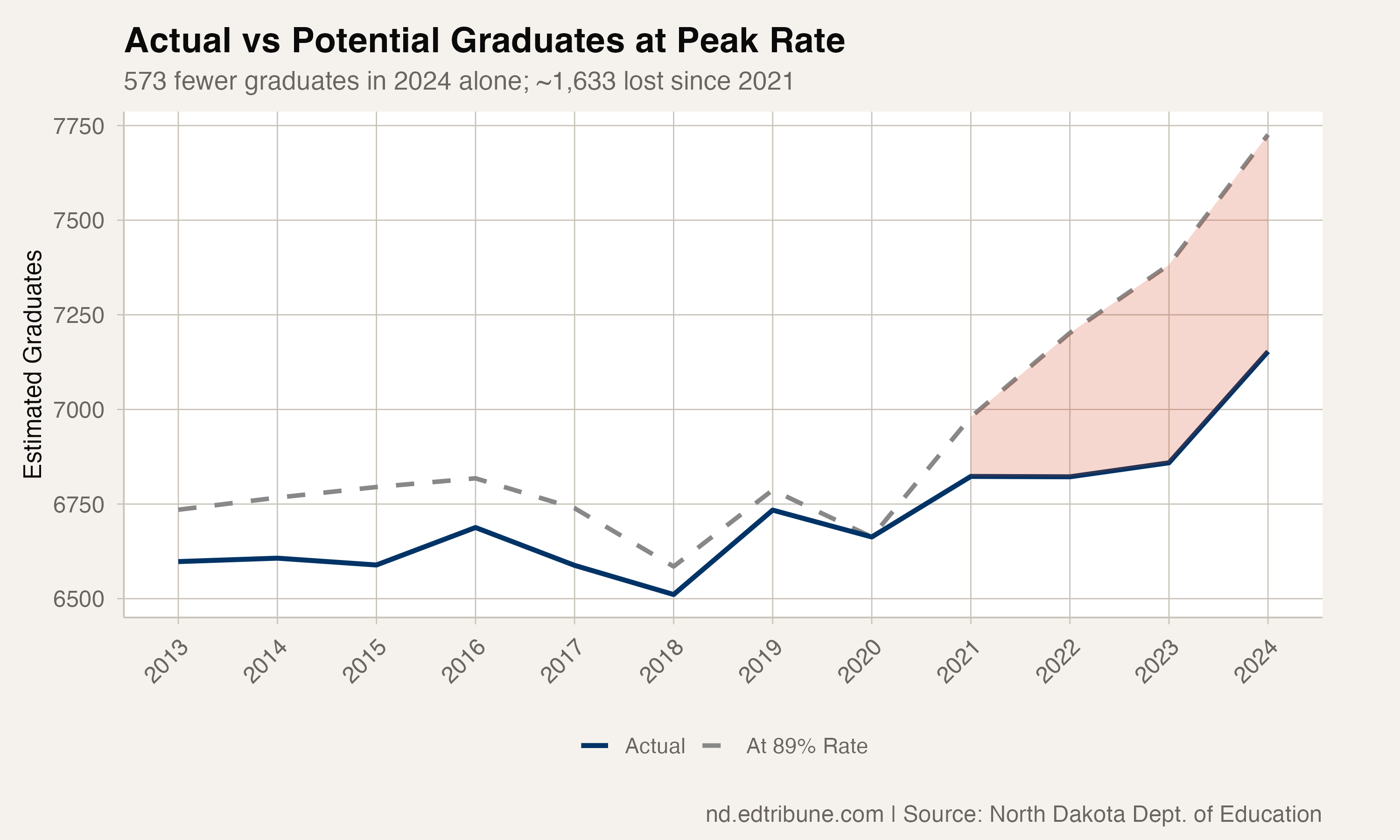
North Dakota's cohort keeps growing, but at its 2020 peak rate the class of 2024 would have earned 573 more diplomas. The cumulative gap is about 1,633.
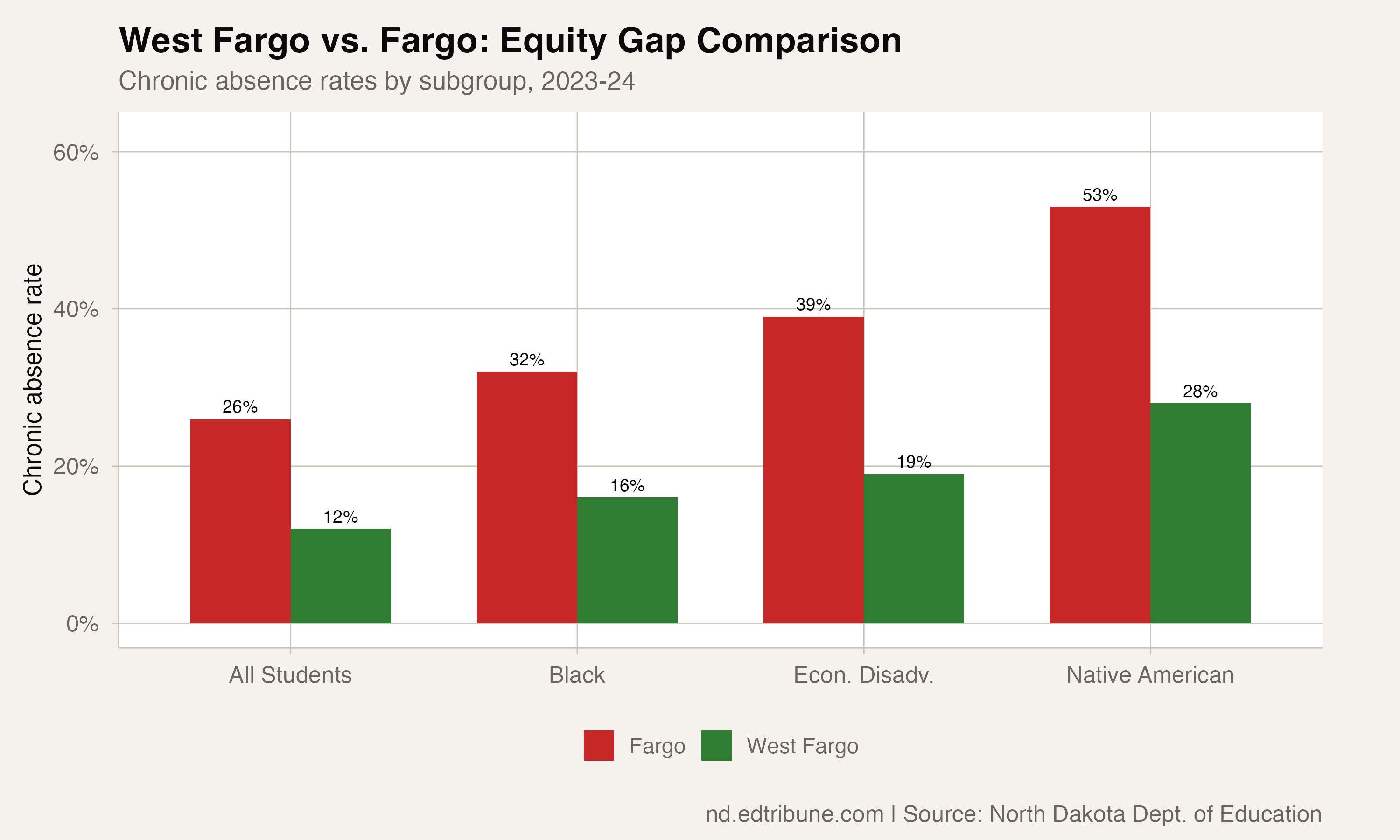
While neighboring Fargo's rate doubled to 26%, West Fargo cut its chronic absence from a 15% peak back to 12%, with mid-year 2024-25 data showing just 3.3%.
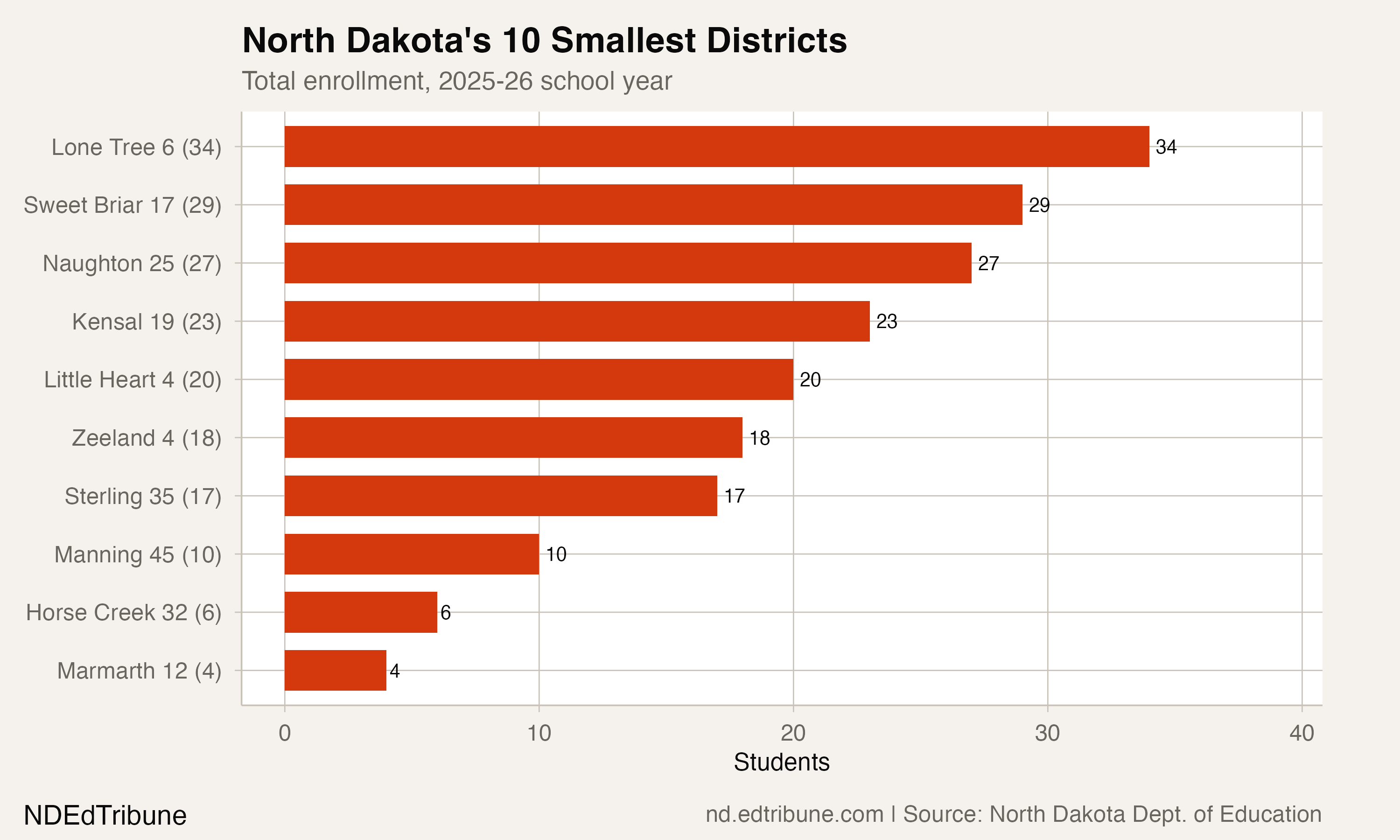
Marmarth School District enrolled 4 students in 2025-26, making it the smallest of 33 North Dakota districts under 100 students.
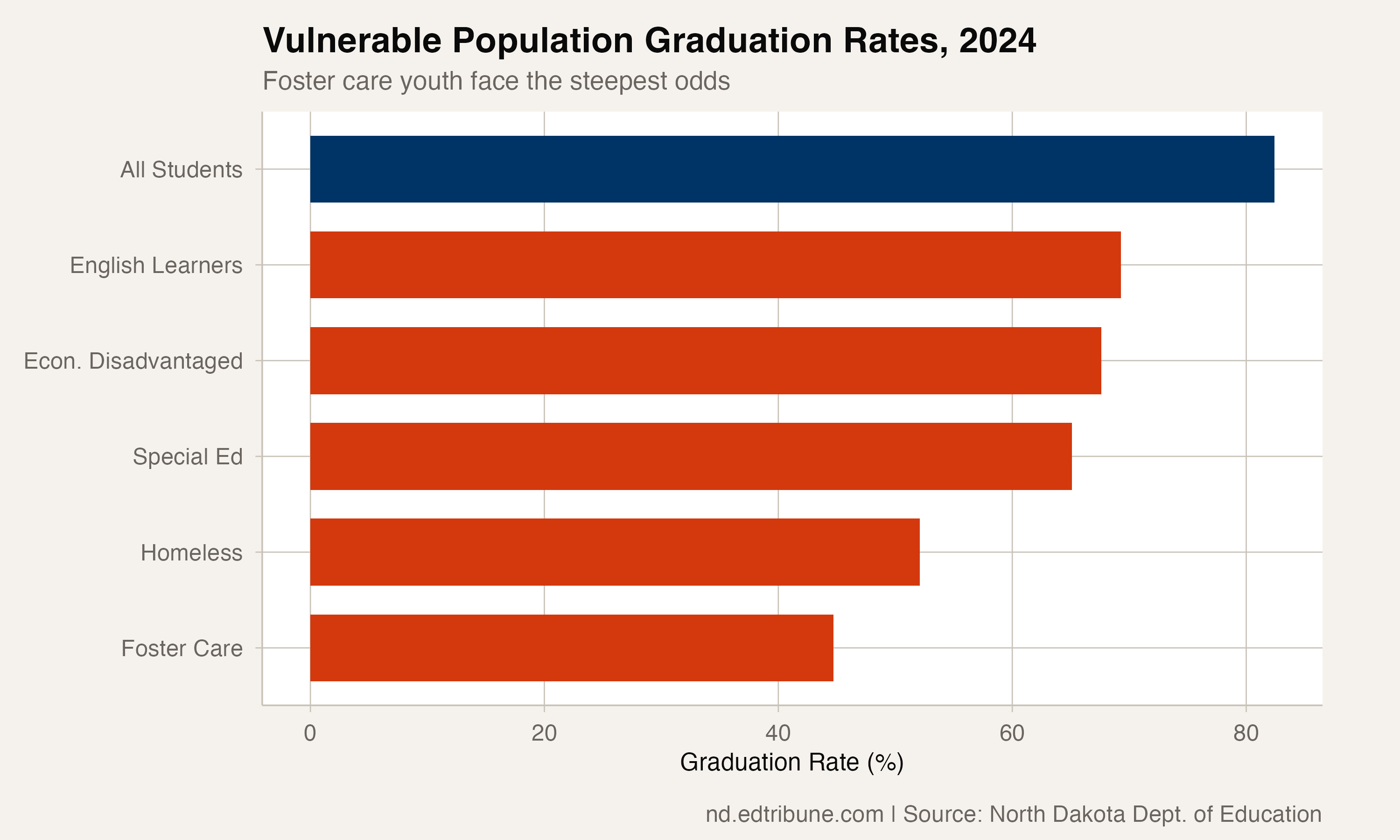
North Dakota's foster care graduation rate has collapsed to 44.7%, down 28 points from 73.1% in 2020, falling well below the national average.
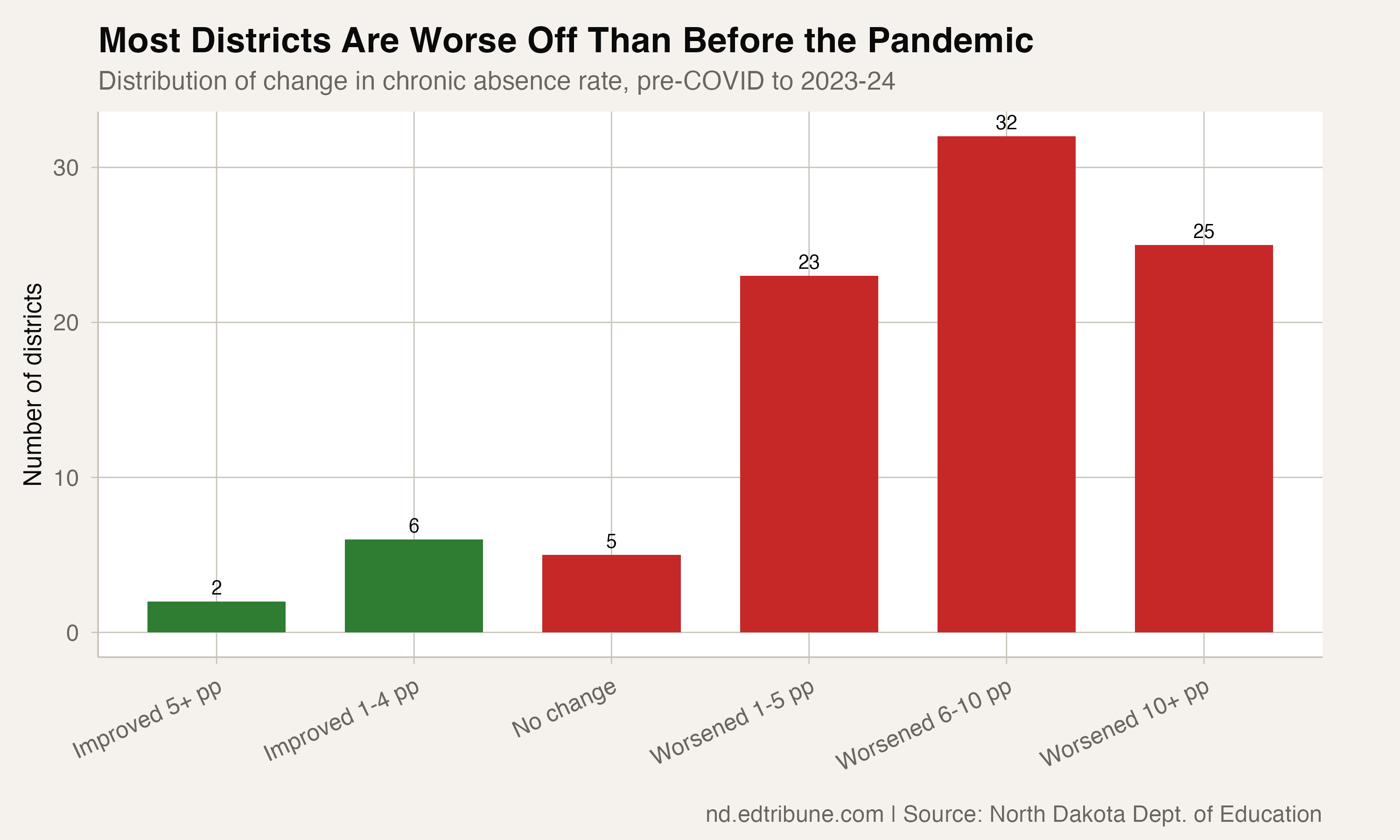
Just 13 of 93 districts with comparable data have returned to pre-COVID chronic absenteeism rates, while 31% are at their all-time worst in 2024.