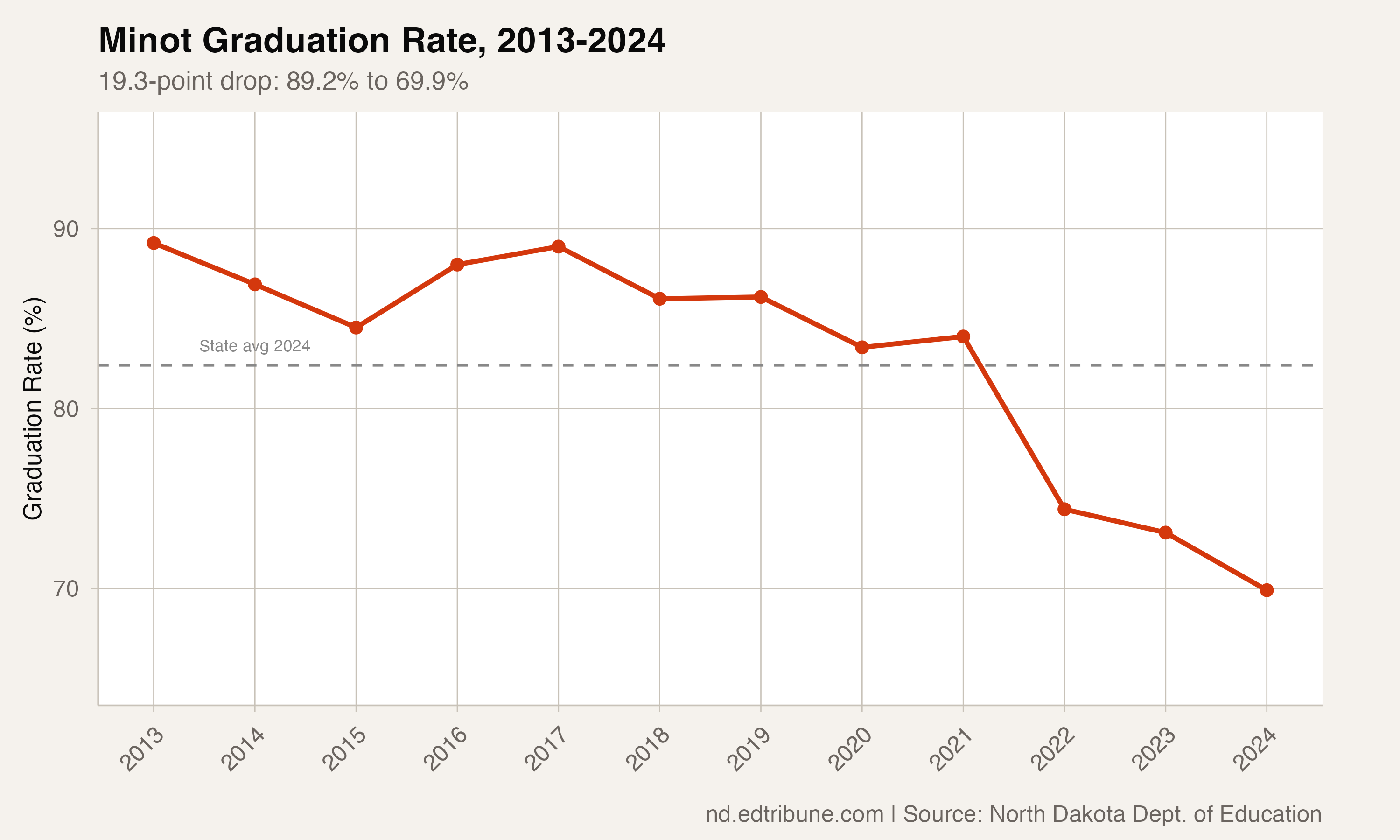
In 2013, nearly nine out of ten Minot↗ET seniors graduated on time. In 2024, fewer than seven out of ten did.
The fifth-largest district in North Dakota by senior cohort posted a 69.9% graduation rate last year, crossing below 70% for the first time in its recorded history. The 19.3-point decline from 89.2% is the largest among any major district in the state. After hovering in the mid-to-upper 80s for most of the decade, Minot's rate collapsed in 2022, dropping 9.6 points in a single year from 84% to 74.4%. It has continued falling since: 73.1% in 2023, 69.9% in 2024.
An accelerating decline
The year-over-year changes tell the story of a district losing ground in stages. Small dips of 2 to 3 points peppered the early years, offset by occasional recoveries. Then 2022 arrived with its 9.6-point crash, the single largest year-over-year decline in the data. The subsequent years brought additional drops of 1.3 and 3.2 points.
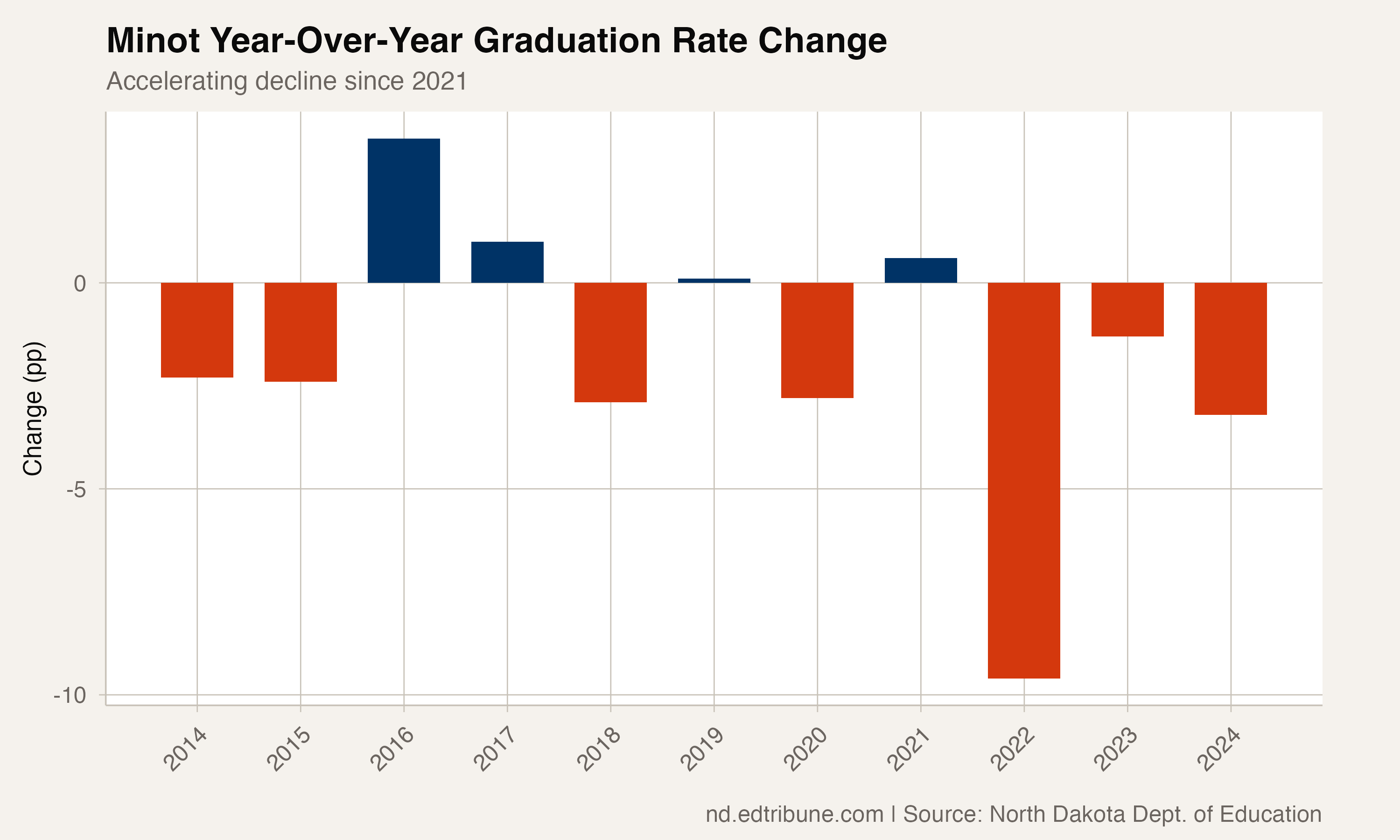
Over the last three years alone, Minot has fallen 14.1 points. Measured against the 2021 rate of 84%, the district is graduating roughly 79 fewer students per year on time than it would have at its earlier performance level.
Every subgroup has declined
The decline is not confined to any single demographic group. Between 2013 and 2024, every subgroup in Minot posted a lower graduation rate.
White students, who make up the majority of the cohort, fell from 90.4% to 77.6%. Black students dropped from 100% (with a small 2013 cohort of 21) to 60.5% with a cohort of 43. Hispanic students declined from 83.3% to 62.2%. Students who are economically disadvantaged fell from 80.4% to 53.4%.
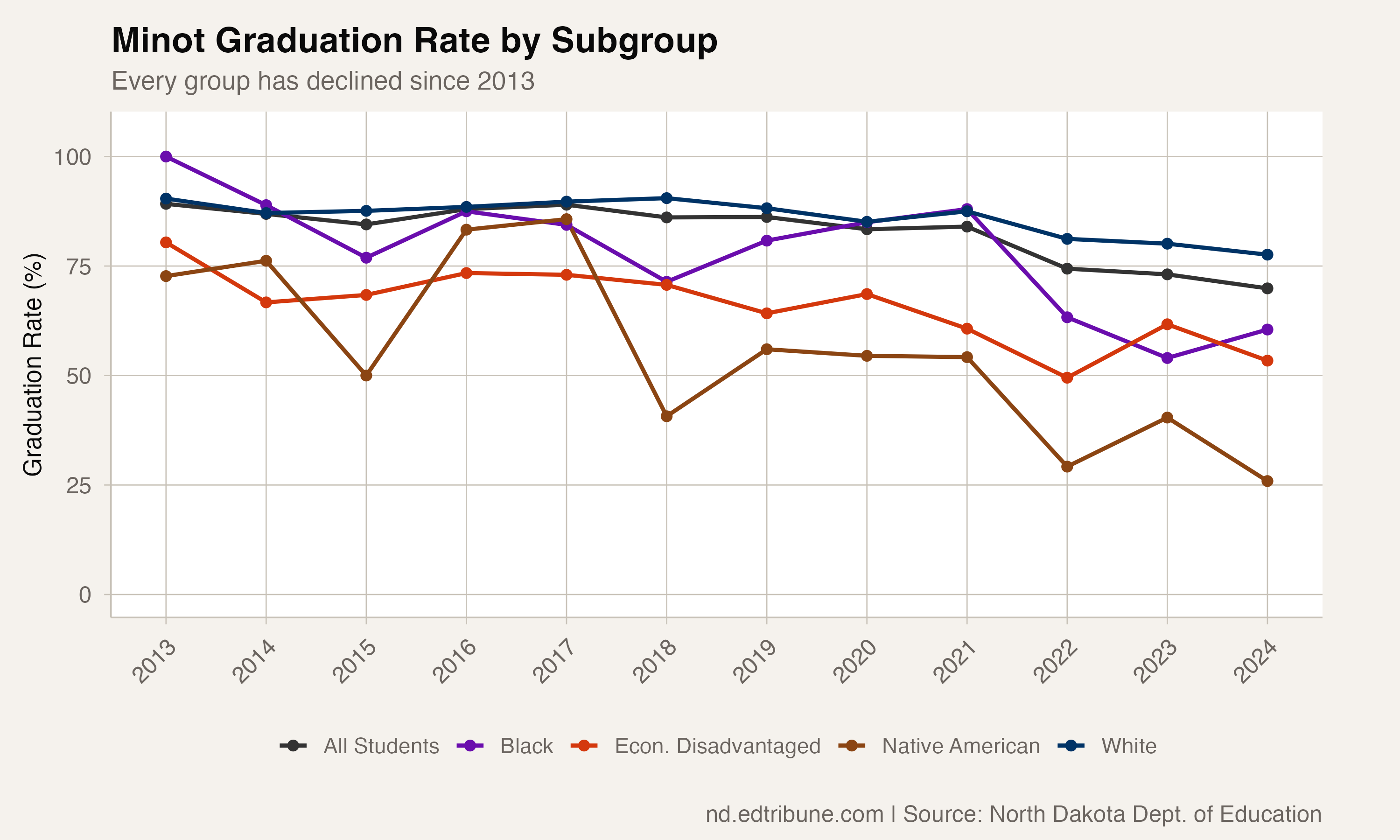
The steepest decline is among Native American students, whose rate fell from 72.7% to 25.9%. That trajectory is covered in depth in a separate analysis of Native American graduation outcomes in Minot.
What sets Minot apart
Other North Dakota districts have declined, but none by this magnitude. Fargo↗ET drifted from 82.3% to 80.0%, a 2.3-point decline. West Fargo↗ET fell from 86.9% to 79.9%, a 7-point drop. Bismarck↗ET peaked at 91.5% in 2019 and has since slipped to 84.5%, still well above its peers.
Minot's 19.3-point decline is in a category of its own. Several factors distinguish the district. The cohort has grown from 471 to 559 students, an 18.7% increase driven partly by the Minot Air Force Base and partly by demographic shifts bringing more diverse families to the region. The share of students who are economically disadvantaged has grown, as has the share of students of color.
But growth alone does not explain 19 points of decline. West Fargo grew its cohort 67% while dropping 11.6 points. Minot grew 18.7% and dropped 19.3. Something about the Minot context has amplified the statewide trends to an extreme degree.
Below the state average by 12.5 points
At 69.9%, Minot now sits 12.5 points below the state average of 82.4%. Among districts with cohorts above 200, only Williston Basin↗ET (68.6%) posts a lower rate. Minot is the economic hub of north-central North Dakota. The gap between the district and the state average was 2 points in 2013. It is now 12.5.
Data from the North Dakota Department of Public Instruction. Graduation rates represent four-year cohort rates. All years use the end-year convention (2024 = class of 2024).
Detailed code that reproduces the analysis and figures in this article is available exclusively to EdTribune subscribers.
Discussion
Sign in to join the discussion.
Loading comments...