Demographics
Six Districts, Half the State
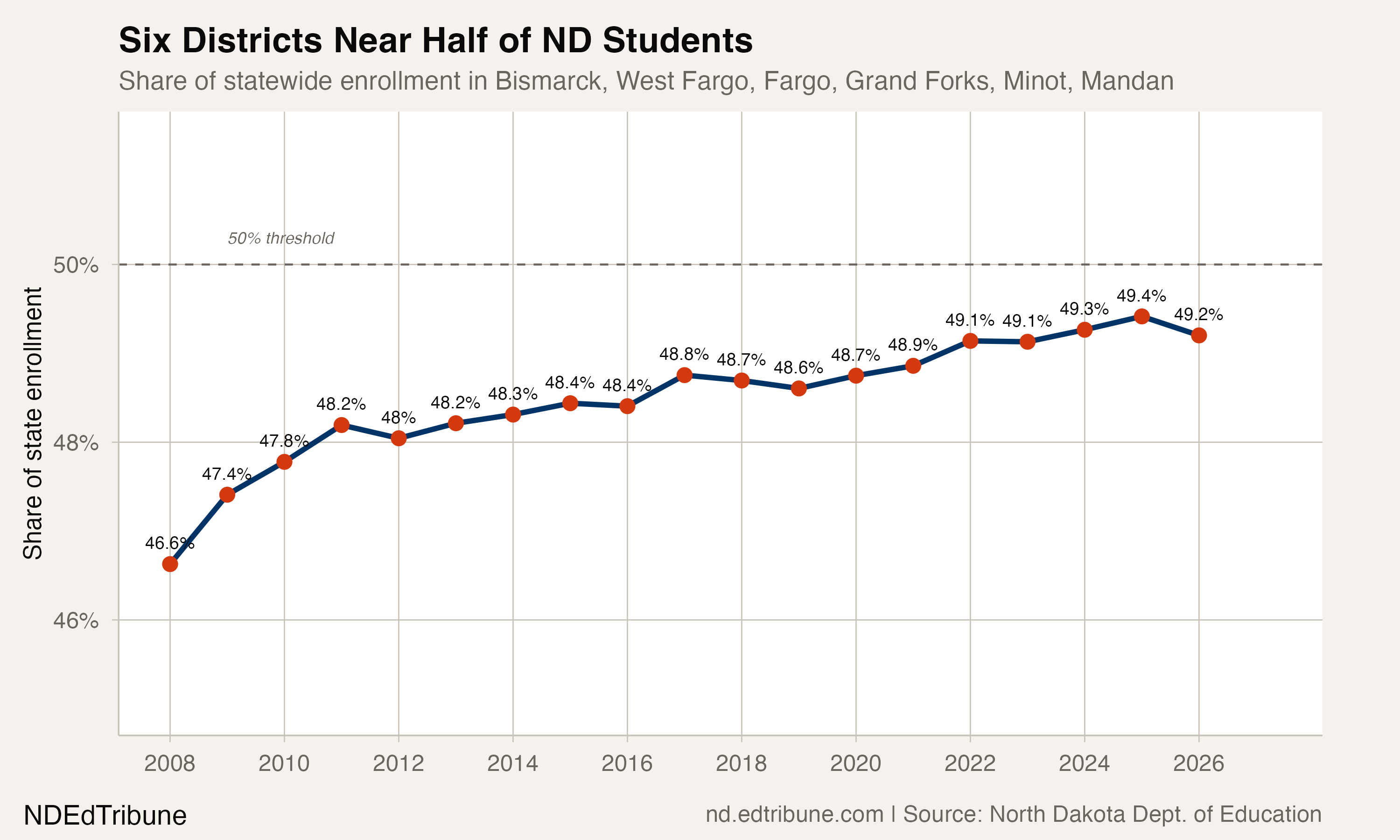
Six urban districts now serve 49.2% of North Dakota students, up from 46.6% in 2008, as the state's 159 remaining districts split the other half.
Peace Garden State Education Coverage, Driven by Data
Page 2 of 3
Six urban districts now serve 49.2% of North Dakota students, up from 46.6% in 2008, as the state's 159 remaining districts split the other half.
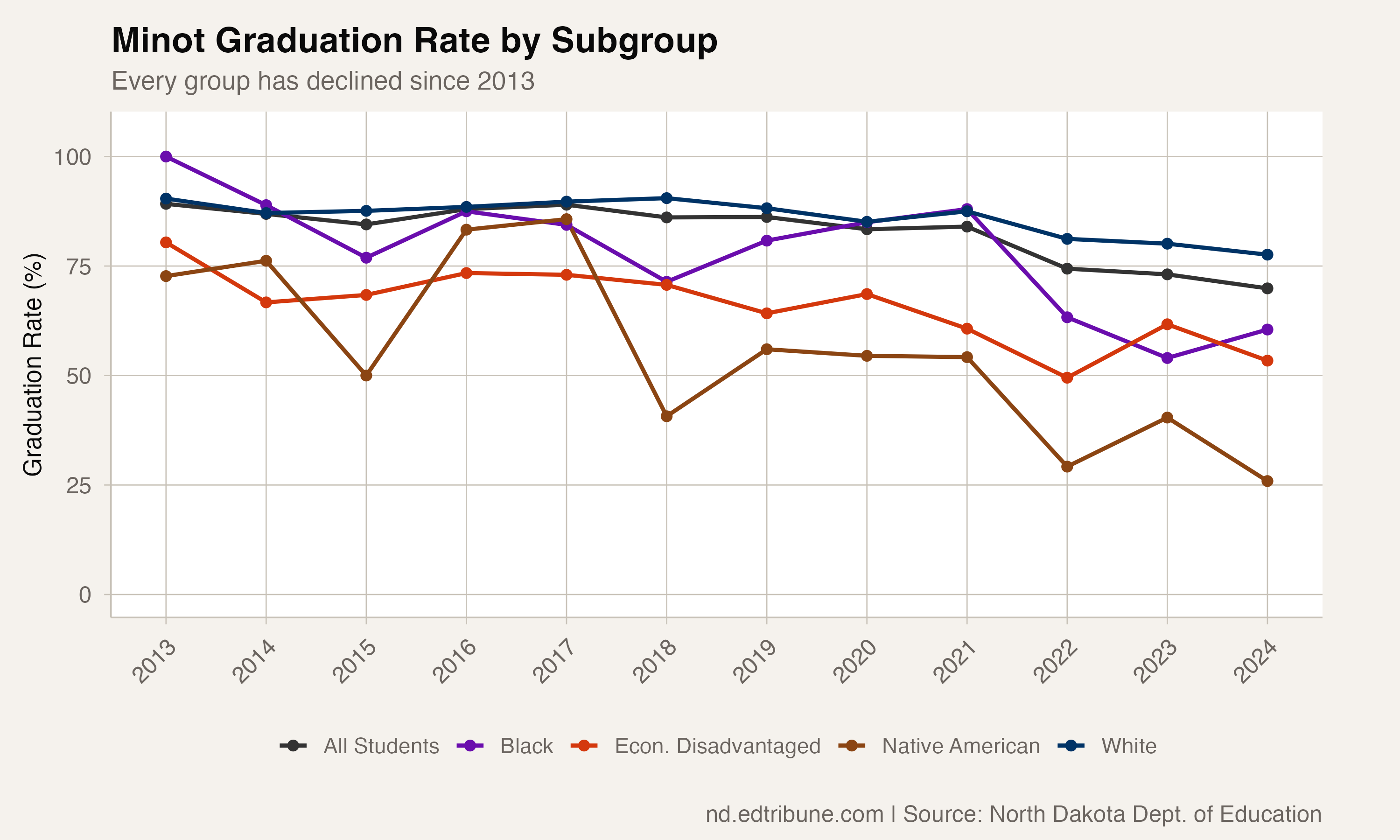
Minot Public Schools crossed below 70% graduation for the first time in 2024, capping a 19.3-point decline from 89.2% in 2013.
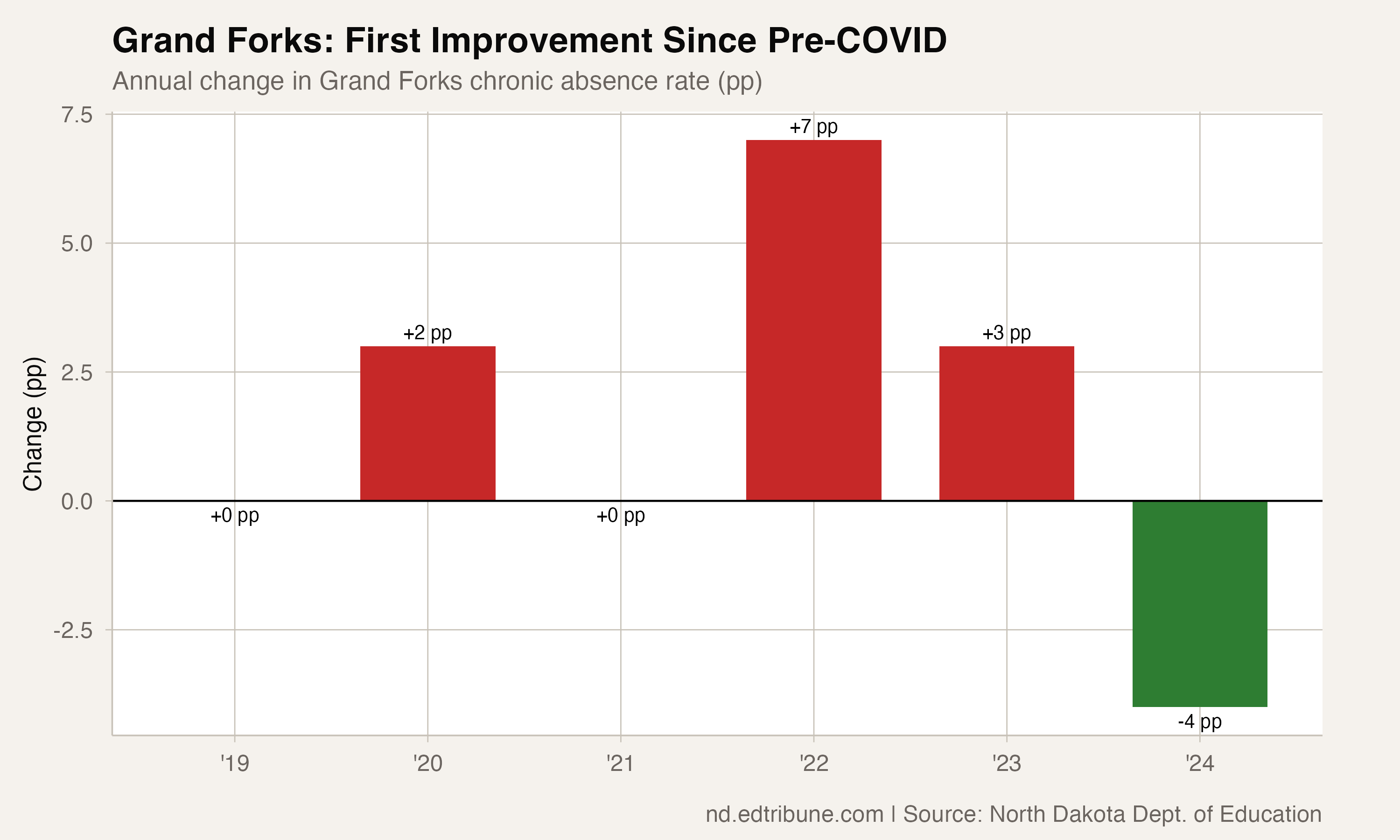
After years of worsening attendance, Grand Forks implemented a new policy that produced the district's first improvement since pre-COVID, dropping chronic absence 4 points to 23%.
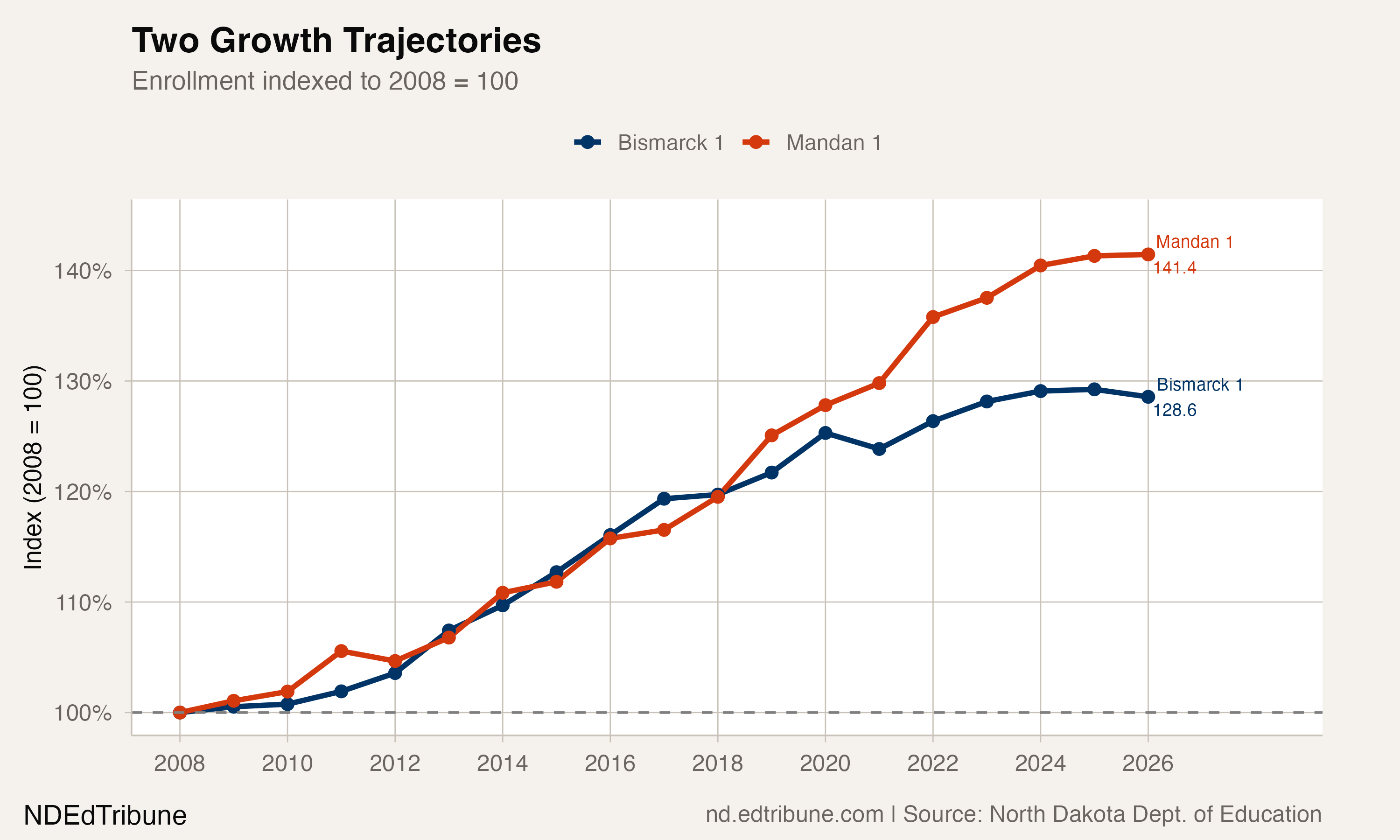
Bismarck-Mandan added 4,328 students since 2008, but K enrollment has fallen 19% in four years and Bismarck just posted its first non-COVID decline.
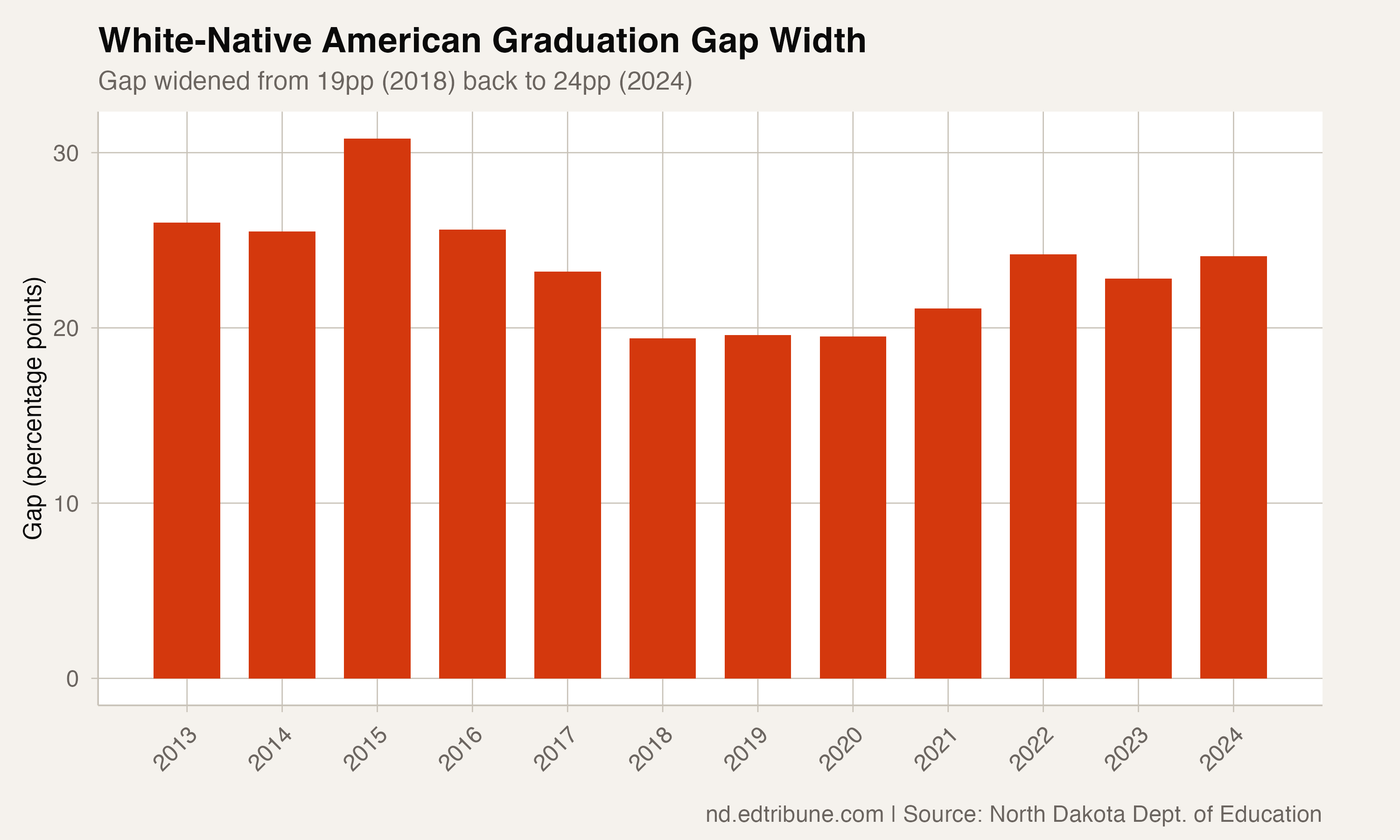
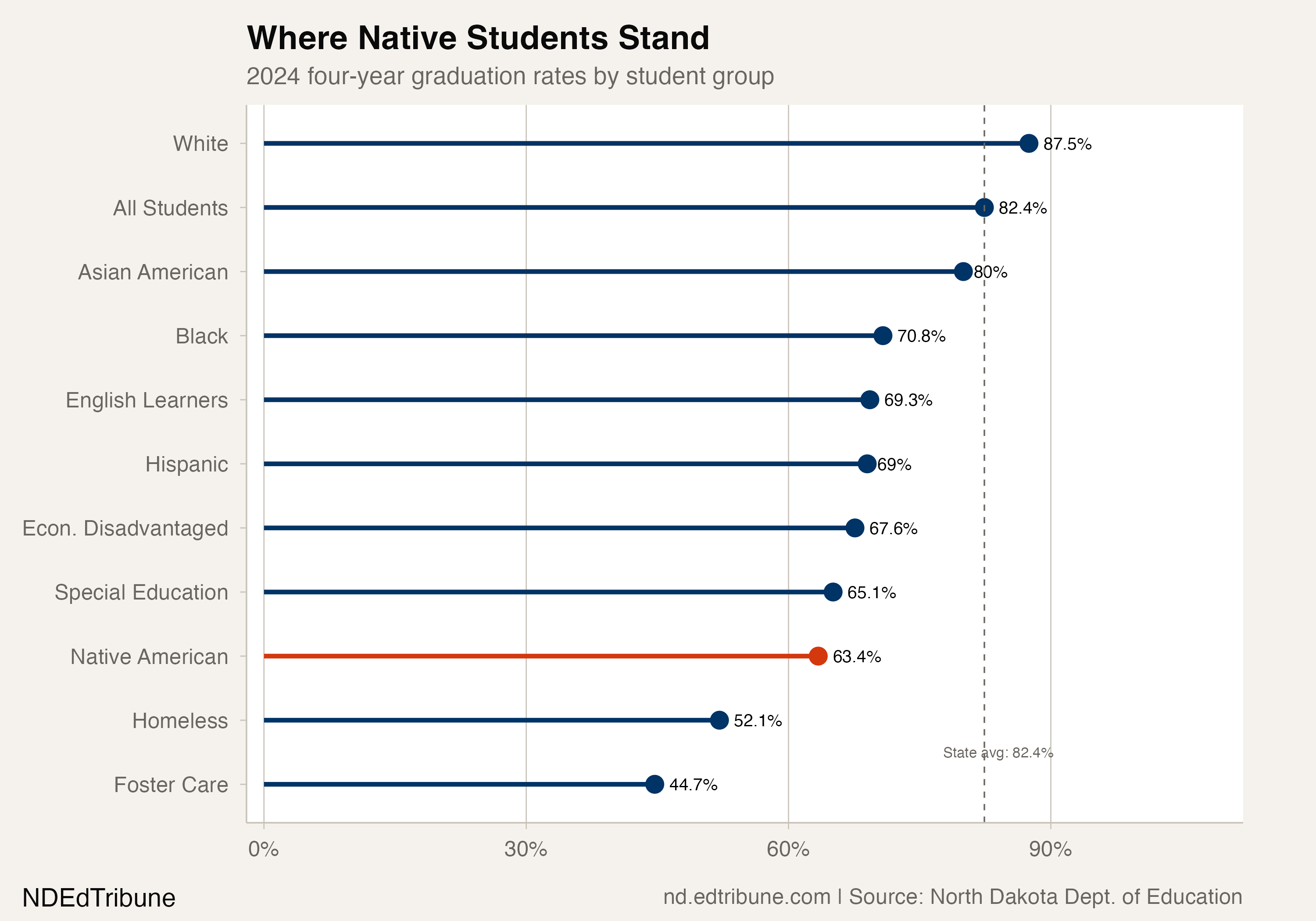
The white-Native American graduation gap widened back to 24 points, erasing all gains made between 2013 and 2018.
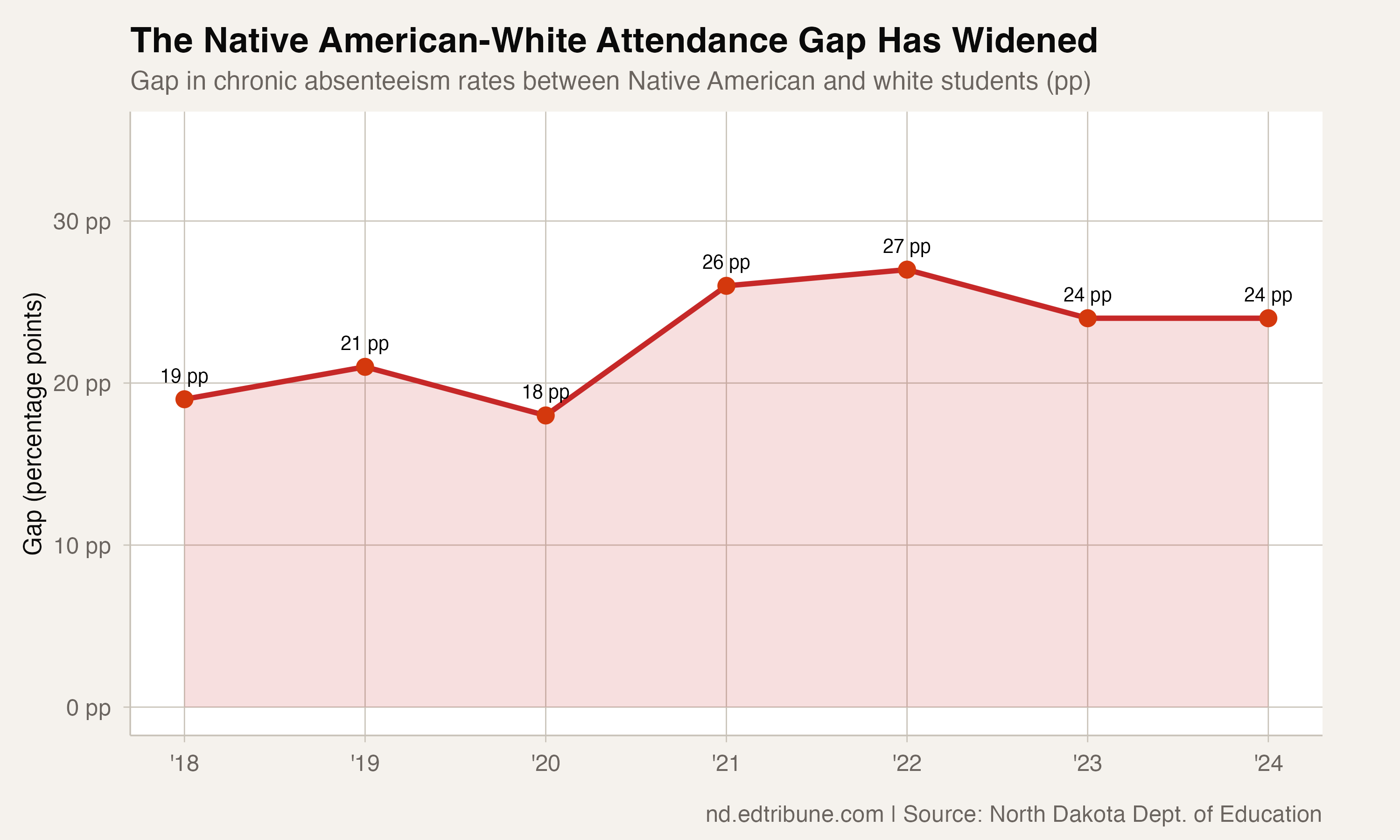
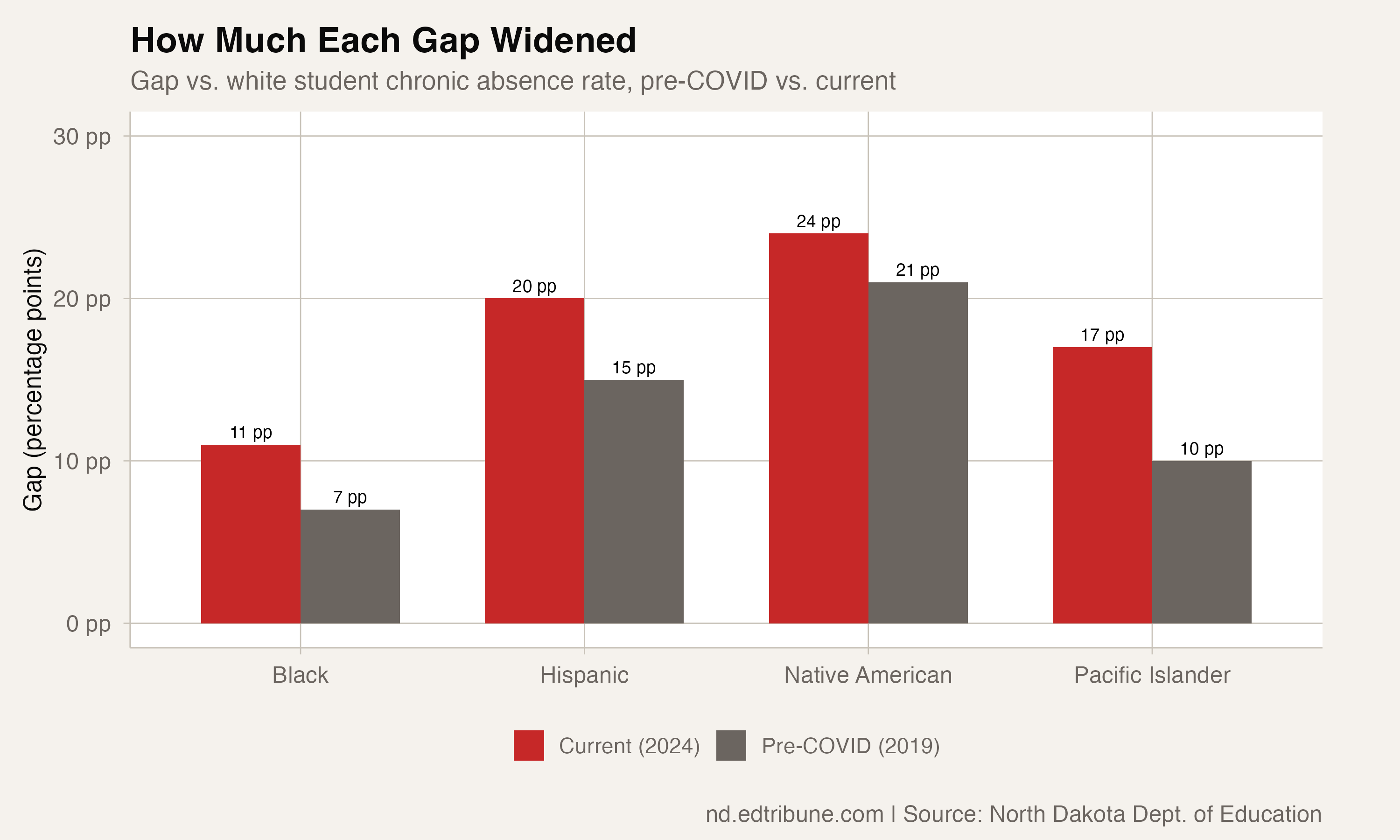
Four of five racial gaps in North Dakota chronic absenteeism are wider than 2019. But the recovery has been uneven across groups: Native American students recovered most from their pandemic peak, Pacific Islander students recovered not at all, and the Asian-white gap inverted.
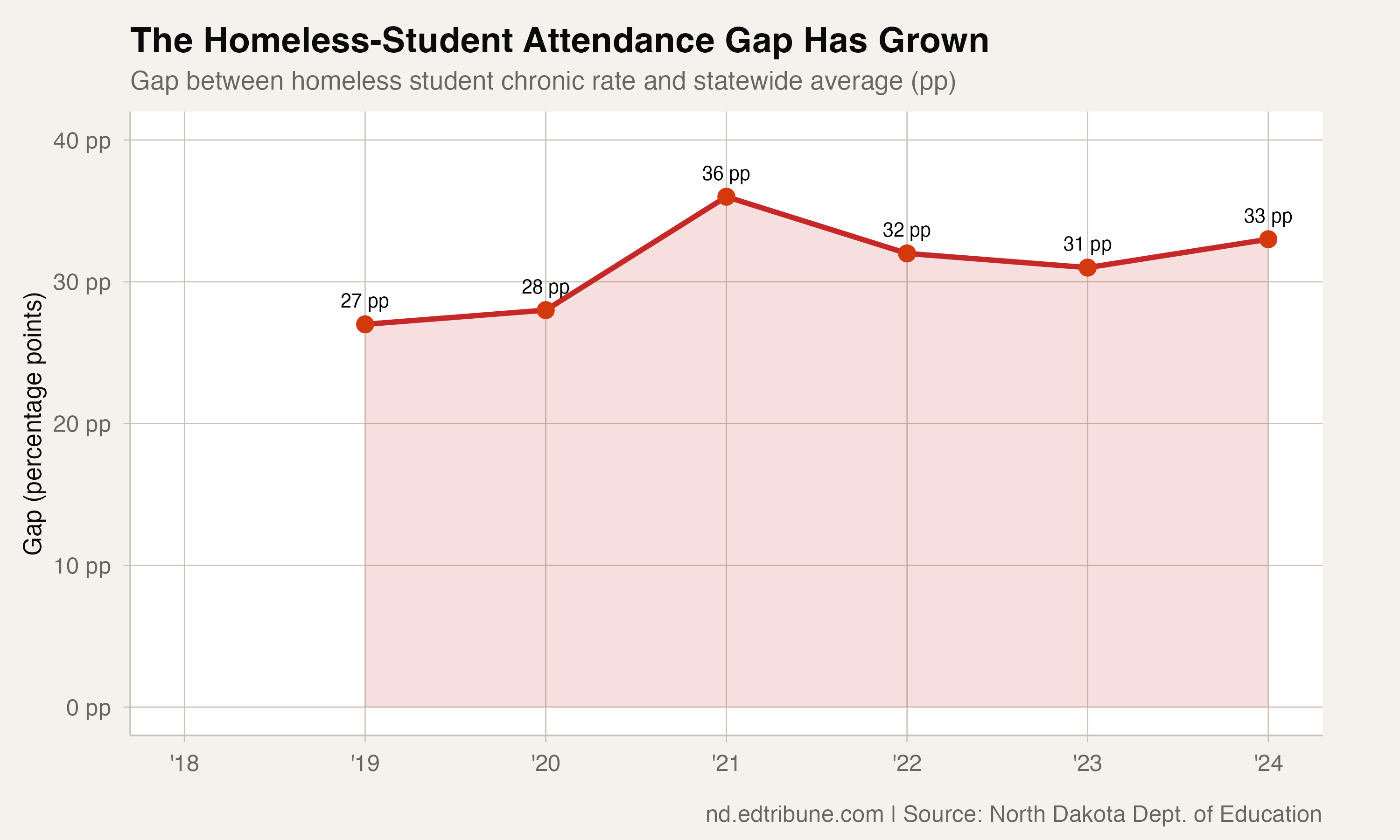
Fifty-three percent of students who are currently homeless in North Dakota miss more than 10% of school days, up from 39% before the pandemic, with virtually no recovery from the COVID peak.
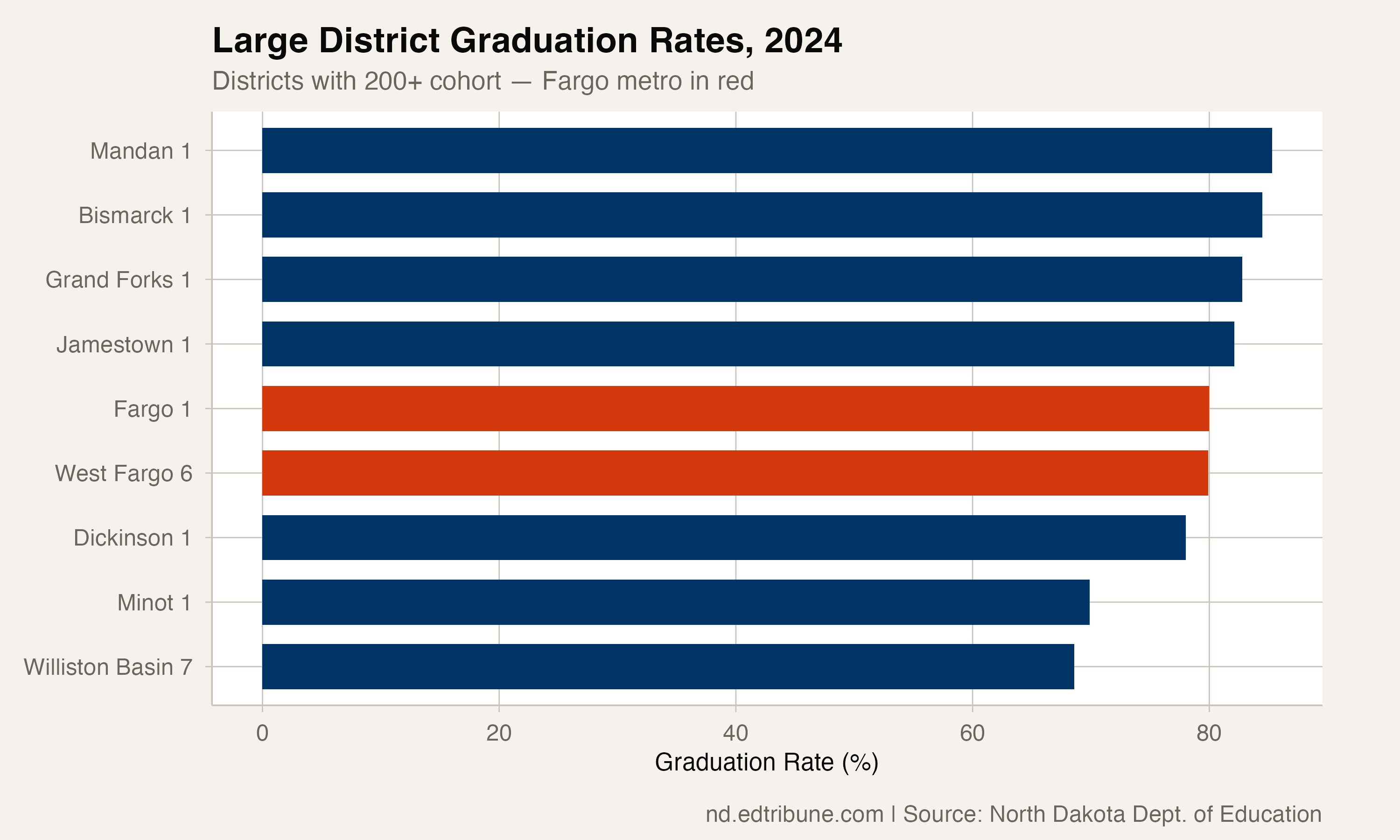
Fargo dropped to 80% and West Fargo to 79.9% in 2024, both all-time lows, despite being the state's fastest-growing metro area.
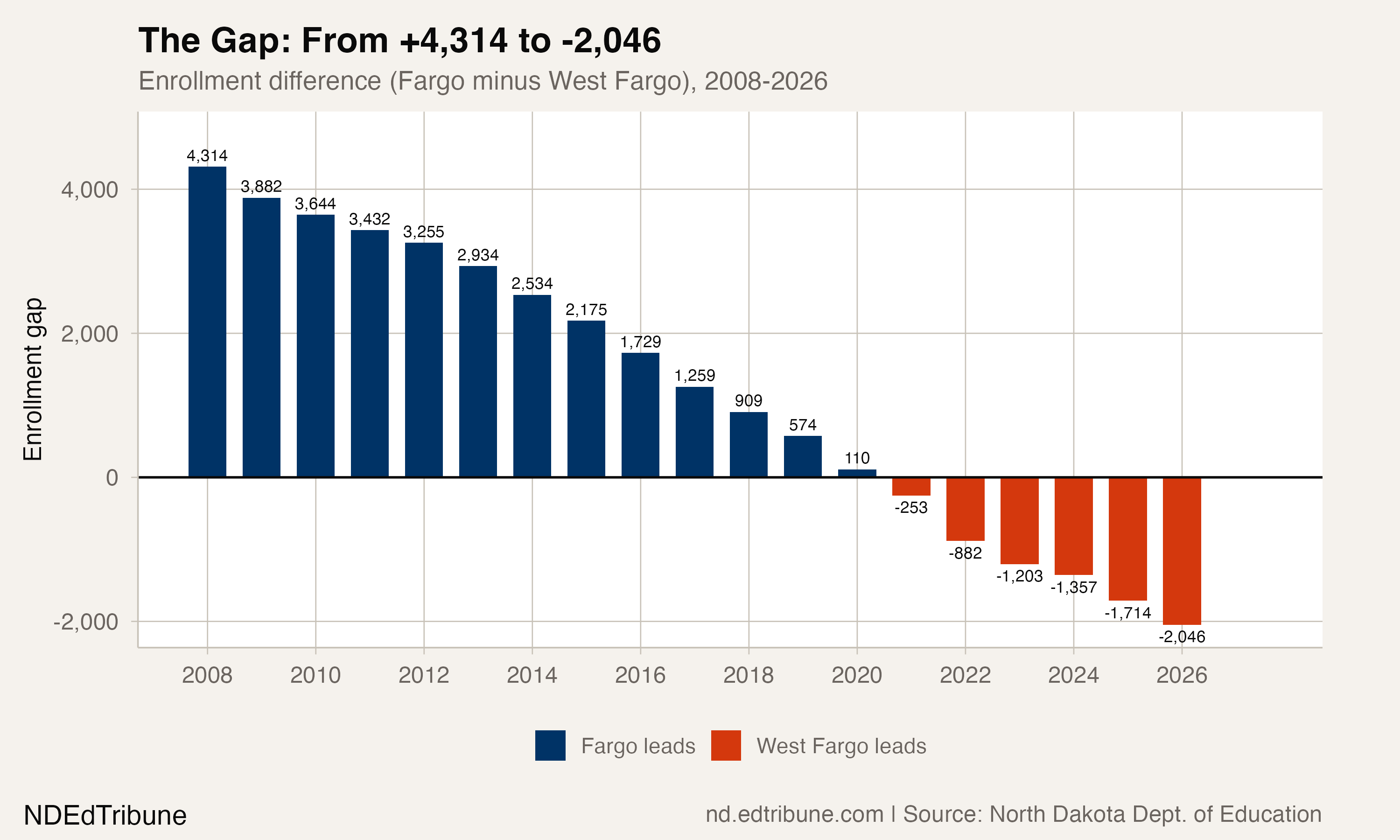
West Fargo's enrollment rose 113.8% since 2008, making it North Dakota's second-largest school district.
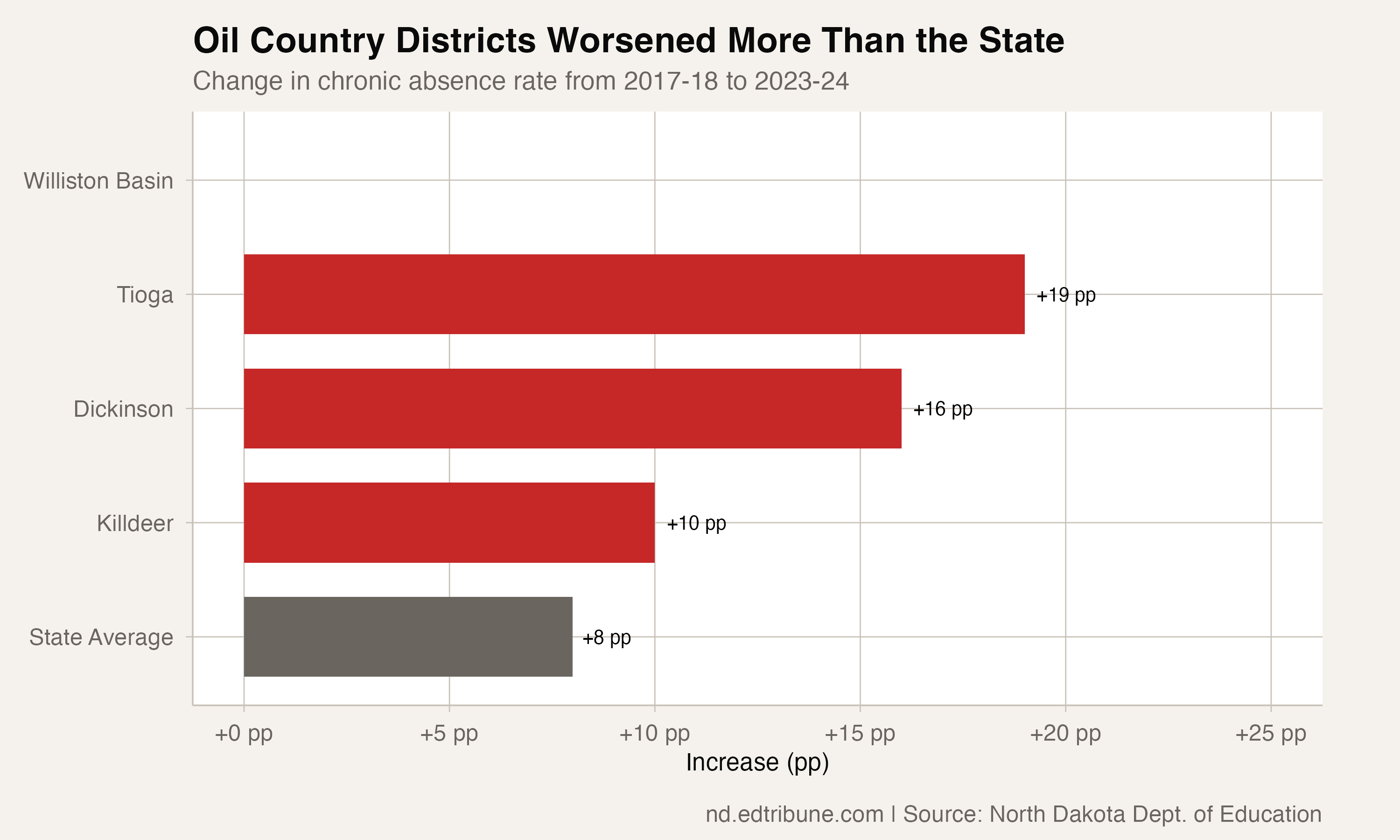
Bakken oil region districts saw chronic absence rates double or triple since 2018, far outpacing the state's 8-point increase, as boom-bust volatility destabilizes school attendance.
North Dakota's 4-year graduation rate dropped to 82.4% in 2024, its lowest in 12 years, even as cohort sizes grew 15%.
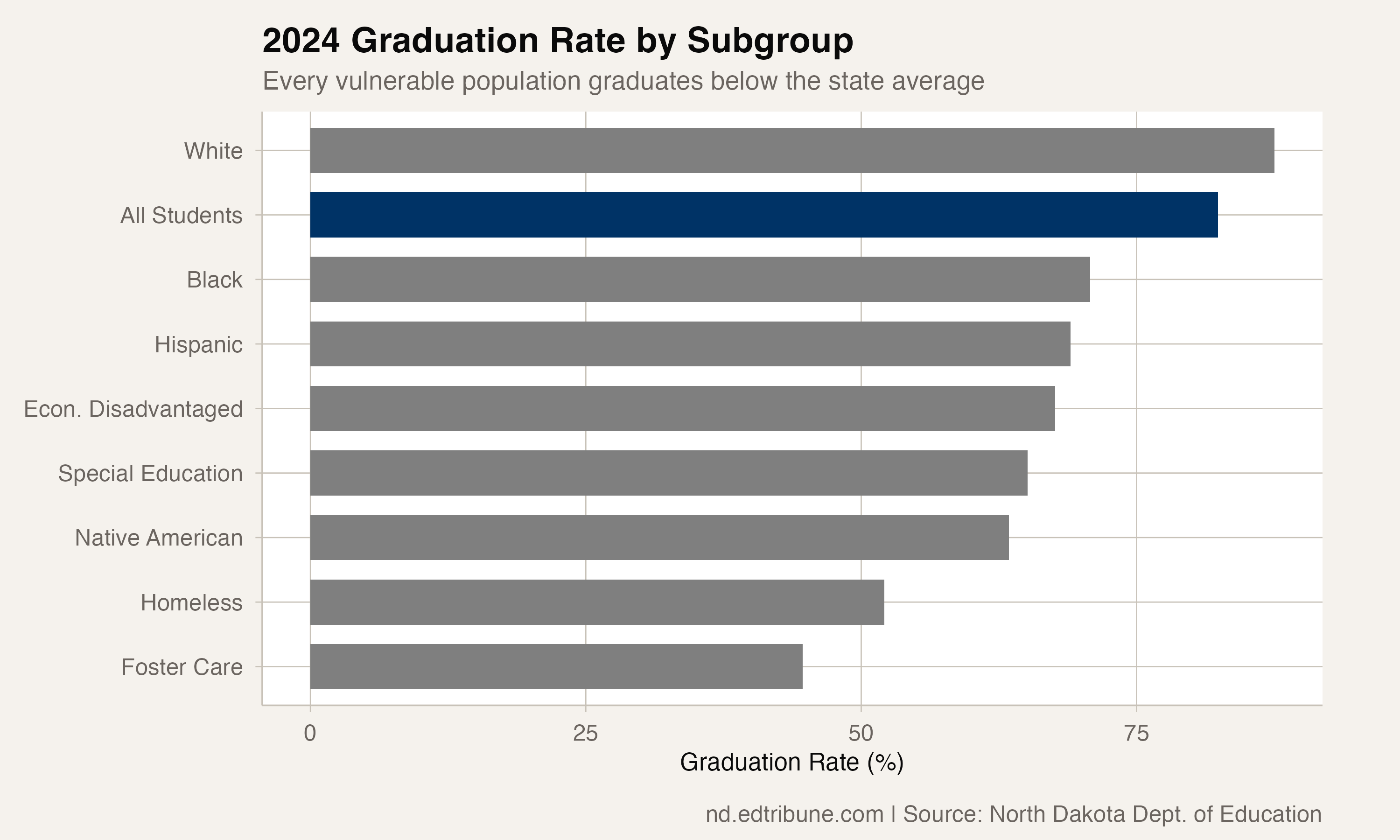
Native American grad rates fell to 63.4% in 2024, erasing six years of gains. The gap with white students widened to 24.1 points.
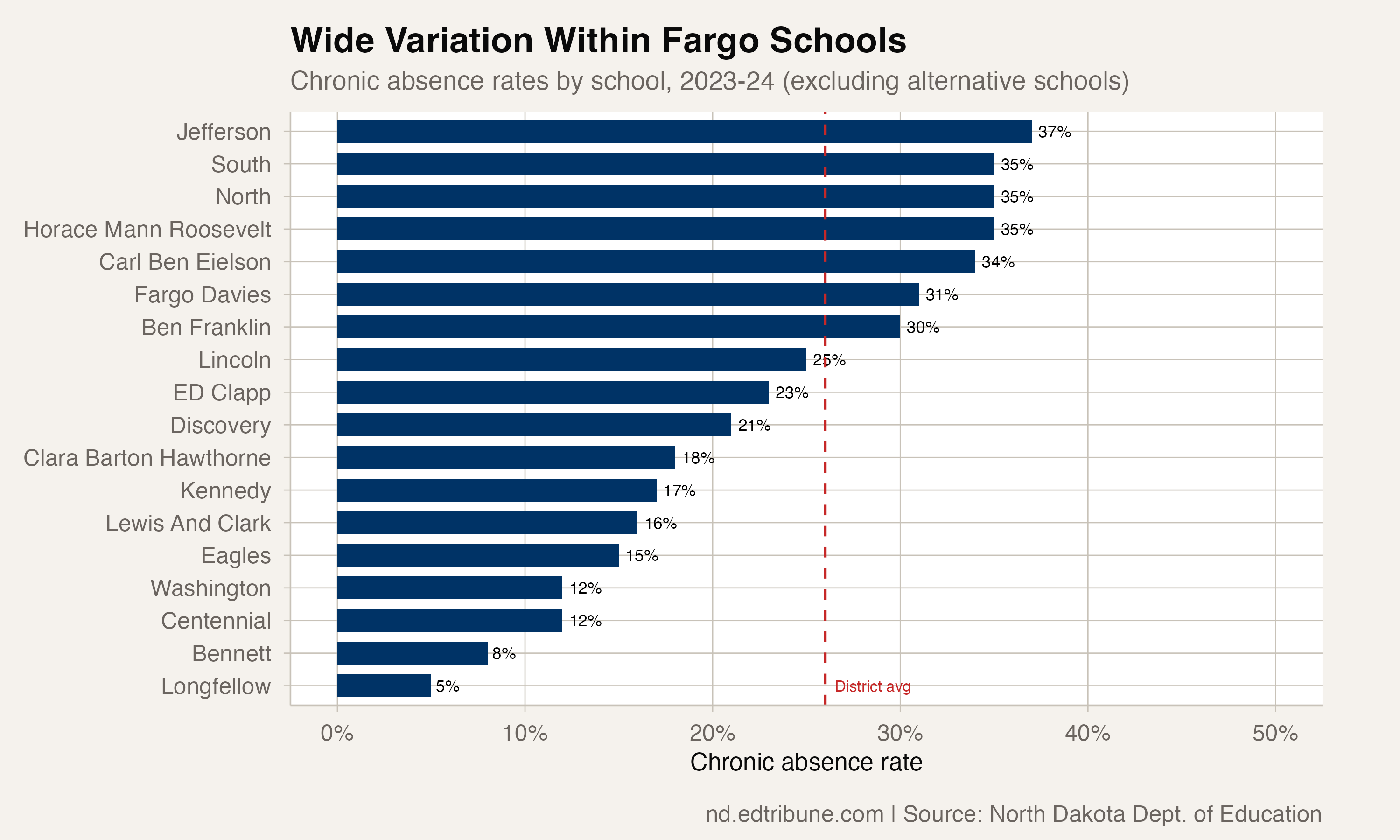
North Dakota's largest district went from 13% to 26% chronic absence, with school-level rates ranging from 5% to 37% and Native American students at 53%.
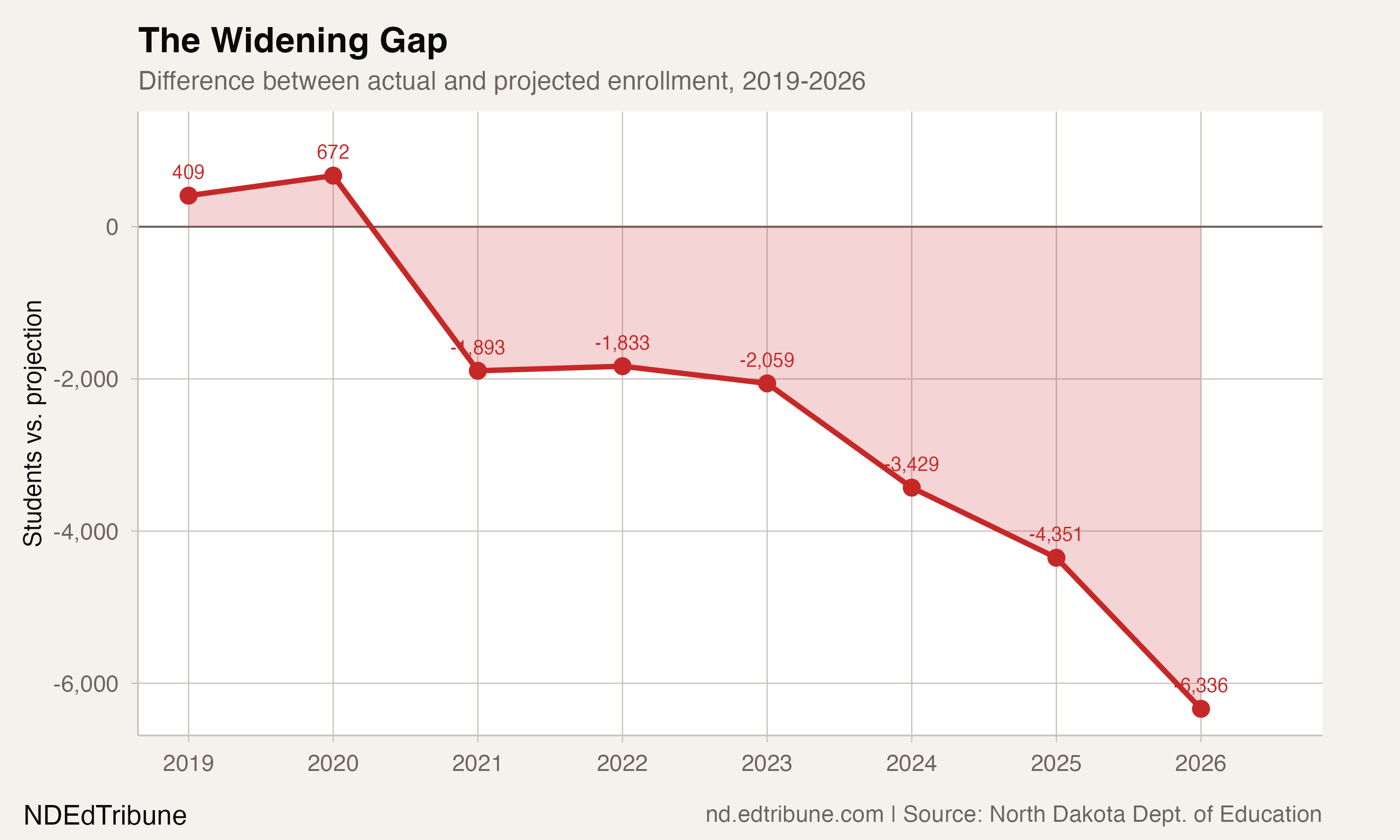
North Dakota's enrollment sits 6,336 students below its pre-COVID trajectory, a gap worth $71.9 million in per-pupil funding that widens each year.
Native American students face a 39% chronic absence rate, 24 points above white peers, with reservation districts like Belcourt and Fargo reporting rates above 50%.