The statewide chronic absenteeism rate in North Dakota has been stuck at 20% for two consecutive years. Behind that flat line is a more detailed and more troubling picture at the district level.
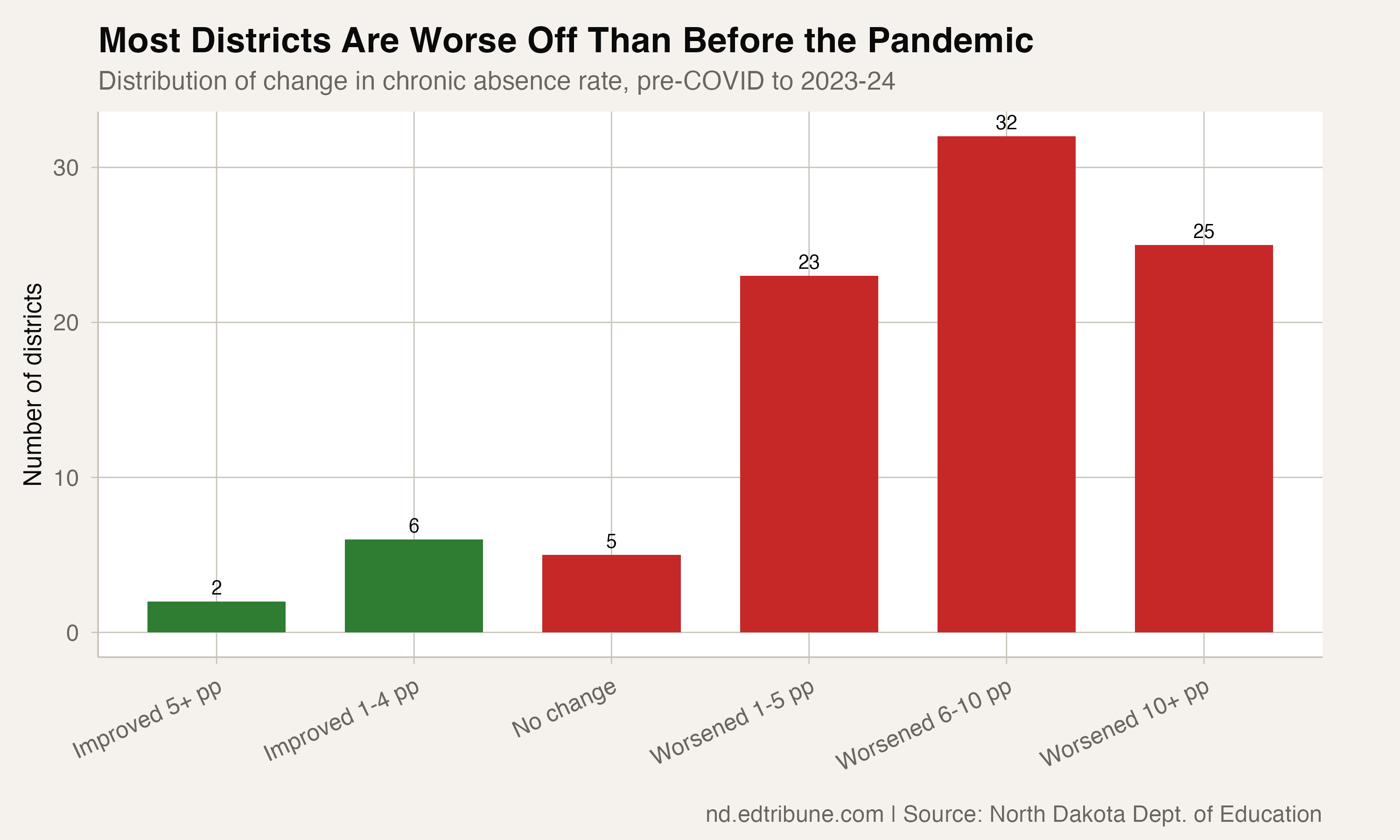
Of the 93 North Dakota districts with chronic absenteeism data spanning both pre-COVID years and 2023-24, only 13 have returned to their pre-pandemic levels. That is 14%, meaning 86% of districts with sufficient data remain worse off than they were before the pandemic upended school attendance norms.
Who recovered and who did not
The 13 districts that have recovered tend to share certain characteristics: they are smaller, they started with lower pre-COVID rates, and their COVID-era spikes were less severe. For these districts, recovery was a matter of returning to an established pattern rather than overcoming a structural shift.
The 80 districts that have not recovered span every geography and size category in the state. Some are barely above their pre-COVID baseline. Others have chronic rates 15 or 20 percentage points higher than before the pandemic, with no improvement trend visible in the data.
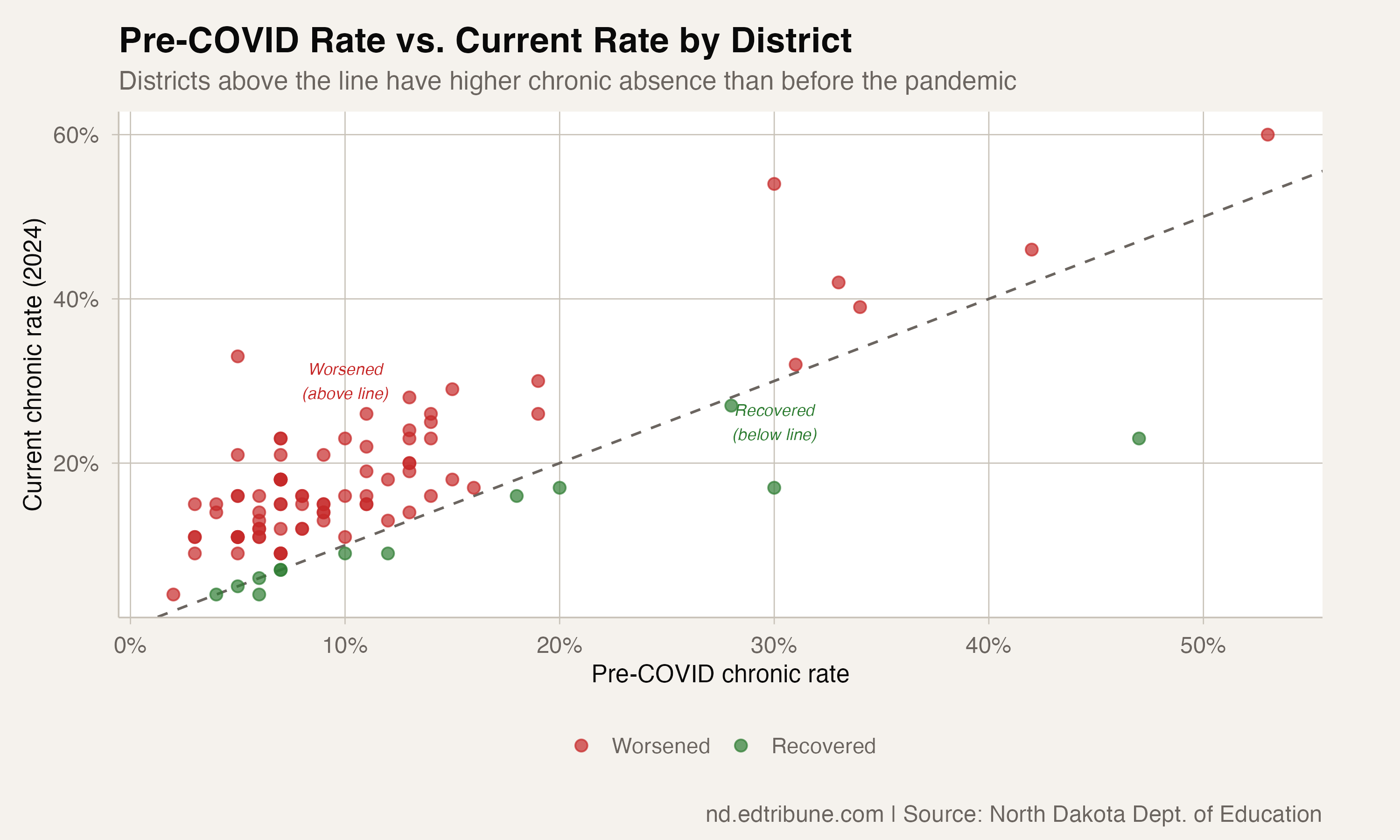
The scatter plot reveals a key pattern: districts that had low chronic rates before COVID mostly remain below the diagonal (meaning they recovered or worsened only slightly), while districts that already had elevated rates before the pandemic tended to worsen the most. The pandemic acted as an amplifier of pre-existing conditions.
31% at their all-time worst
Perhaps more alarming than the low recovery rate is this: 31 of the 101 districts with at least three years of data are recording their worst-ever chronic absenteeism rate in 2024. That is 30.7% of districts at their all-time high, not in 2021 when COVID was disrupting everything, not in 2022 when the post-pandemic spike peaked statewide, but in 2024, two full years into what was supposed to be the recovery period.
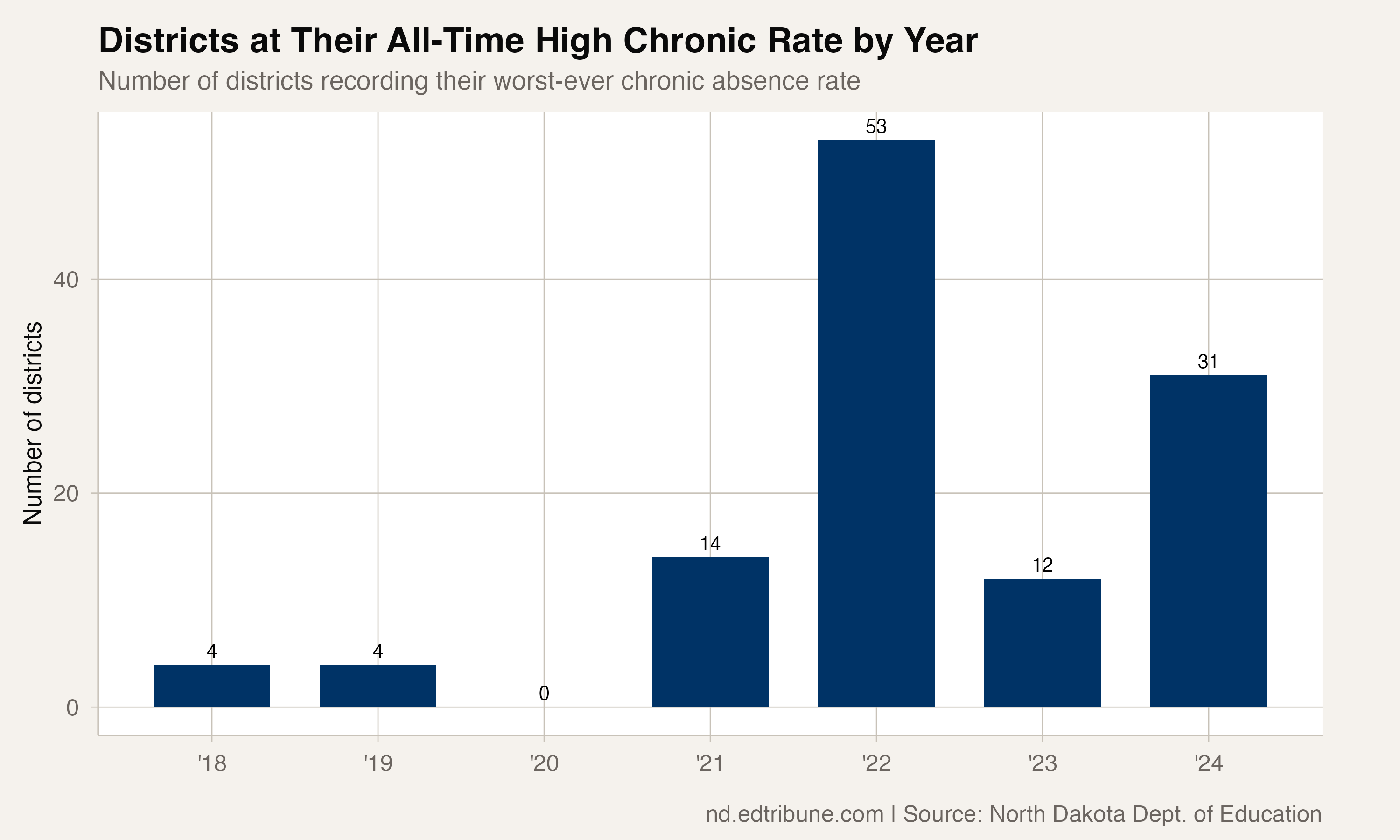
For these 31 districts, the trajectory is going the wrong direction. Whatever gains were made in 2022-23 have been erased or never materialized, and 2023-24 represents a new low point in regular school attendance.
The worst deterioration
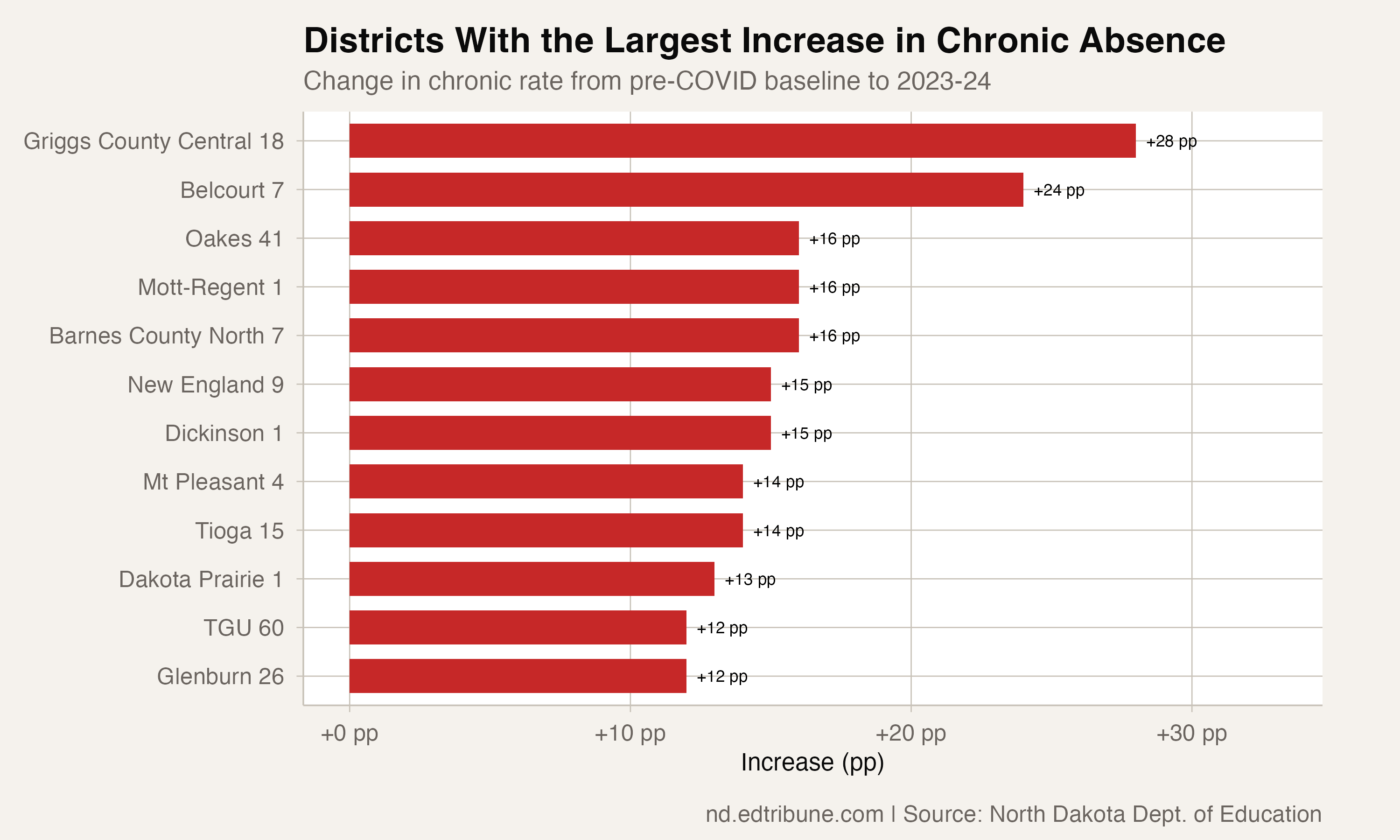
Among the districts with the largest increases in chronic absenteeism since pre-COVID, the numbers are dramatic. Several districts have seen their rates climb by more than 15 percentage points, turning what were once moderate attendance challenges into severe ones. The state average itself increased 8 points (from 12% to 20%), so districts exceeding that threshold have deteriorated faster than the already-grim statewide trend.
What 14% means for policy
A 14% district recovery rate means that whatever North Dakota has been doing to address chronic absenteeism at the state level has not translated into widespread district-level improvement. The approaches that worked for the 13 recovered districts -- assuming they reflect intentional strategy rather than demographic luck -- have not been replicated elsewhere.
The harder question is whether anyone is trying. Thirteen districts found their way back. Eighty did not, and 31 are posting their worst numbers ever. That is not a state with a recovery problem. It is a state that has, for the most part, stopped recovering.
Detailed code that reproduces the analysis and figures in this article is available exclusively to EdTribune subscribers.
Discussion
Sign in to join the discussion.
Loading comments...